Even when I am old and gray,
do not forsake me, my God,
till I declare your power to the next generation,
your mighty acts to all who are to come.
Psalm 71:18
It’s helpful to reflect on moments in your life where you experienced God’s faithfulness, heard his voice, or felt his presence. Our stories are part of a bigger story and remembering how our stories fit into his story of redemption is anchoring.
We are invited to join God in his work of restoration, living with purpose and participating in his mission in the world – and a major part of that mission calls us to remember, to reflect and to share who God is and what he has done.
On the way to the promised land, Joshua had to lead the Israelites through the Jordan River. As soon as the priests carrying the ark of the covenant reached the waters, the river miraculously stopped flowing, and all the Israelites crossed on dry ground. After crossing the Jordan, Joshua instructed one person from each of the twelve tribes to take a stone from the middle of the dry river.
“When your children ask you, ‘What do these stones mean?’ tell them that the flow of the Jordan was cut off before the ark of the covenant of the Lord,” Joshua told them. “These stones are to be a memorial to the people of Israel forever” (Joshua 4:6-7).
Joshua set up these stones as a memorial for Israel to remember God’s faithfulness and to reflect upon that with their children.
Significant moments of God’s presence and guidance are personal “stones of remembrance” that anchor us personally and collectively.
What “memorials” can you remember? Do they remain in your memory only or do you have anything physical that reminds you of that special time in your life? Do you have any “memorials” in your home that your friends, children or grandchildren can ask about? Maybe it’s a photo, a song or a special souvenir or artefact you can share the significance of. Do your friends know how you came to faith?
Our personal and collective histories help us understand who God is, who we are, and who we are becoming. As we considered the identity we are called to live from we looked at the meaning of our names, values we embody and how to build every day God-conversations into our communities.
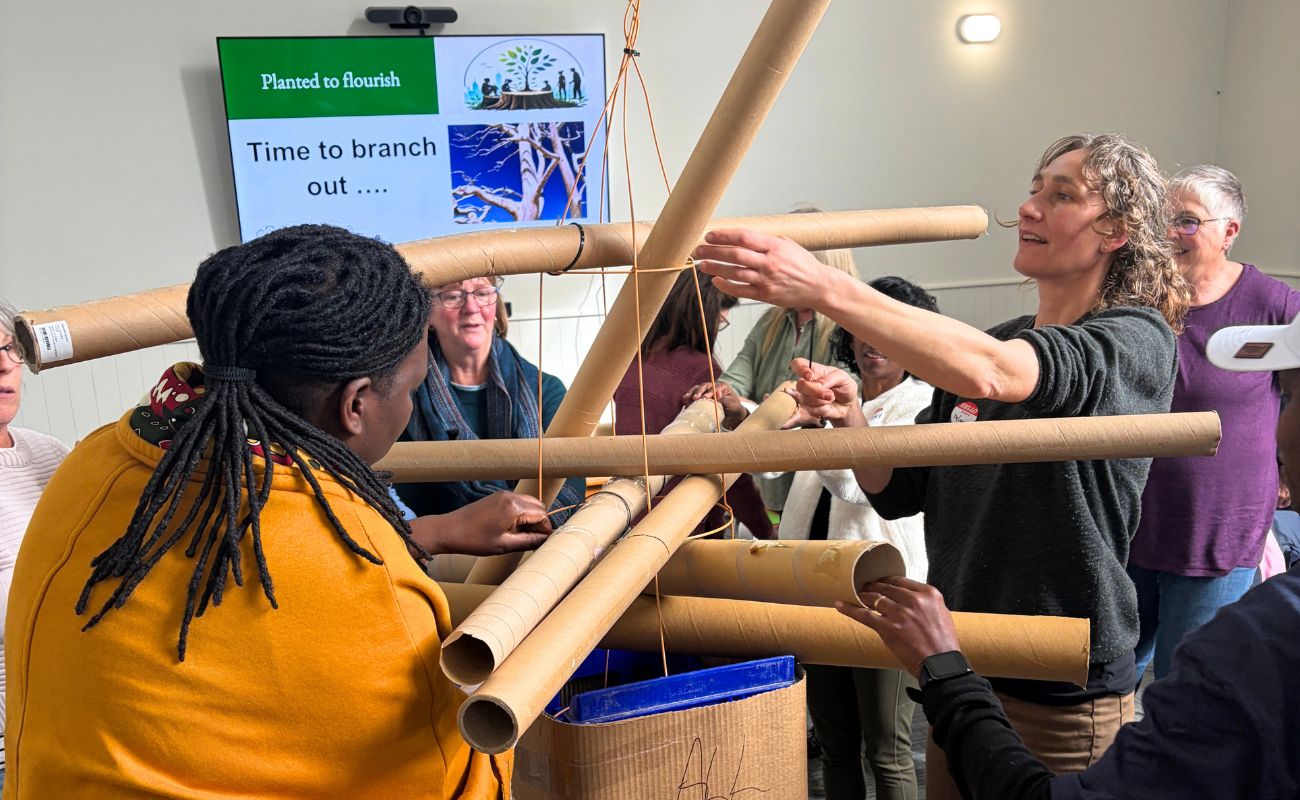
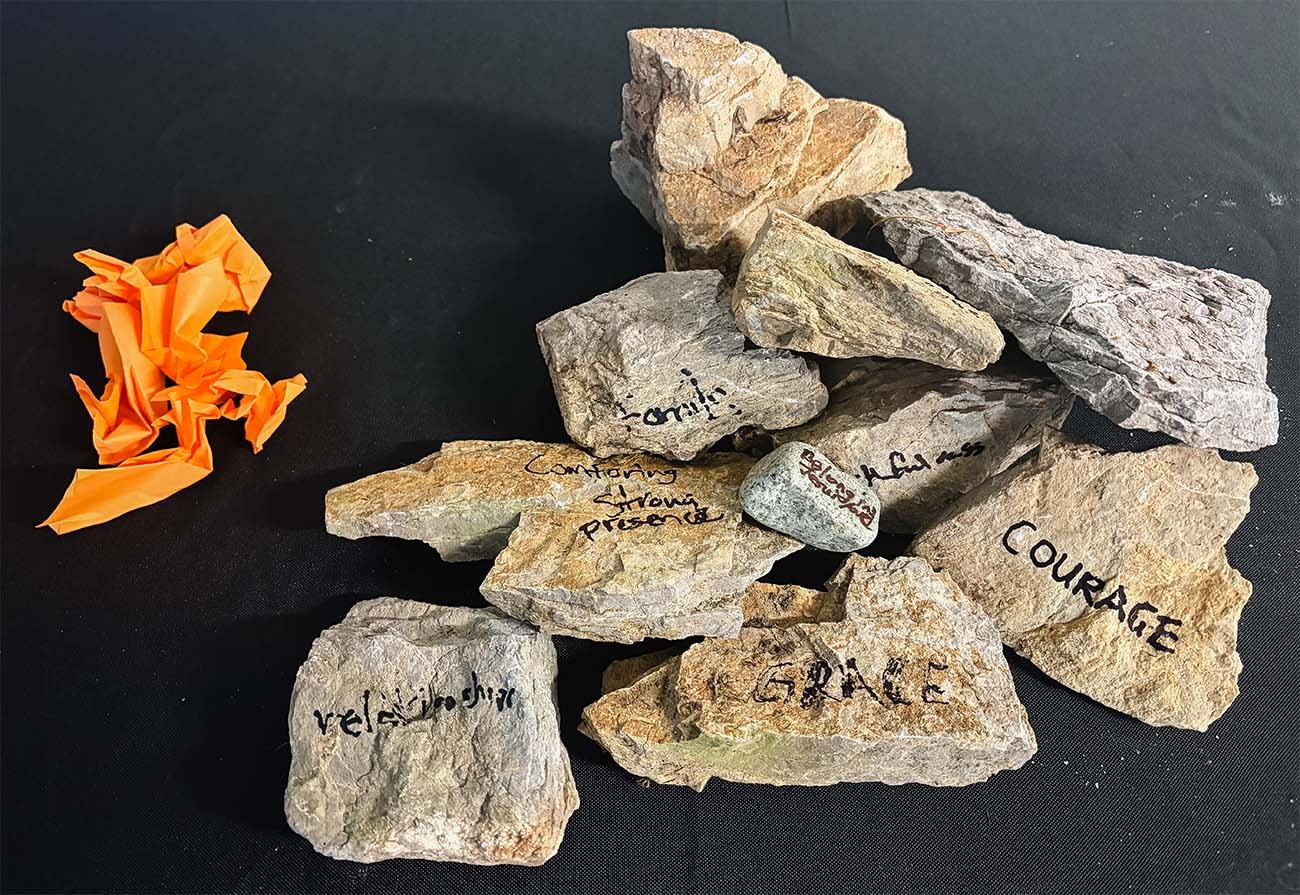
When we explored these ideas and memories at our Emmaus workshop, participants at the workshop were invited to lay down heavy burdens by writing and crumpling a piece of paper. Words recalling God’s faithfulness in our lives or our church were written on stones and we built a memorial together.
We are invited to live out of our God-given identity, centred on the nature and character of God and to not keep quiet, but to share that with one another. Here are some questions you might like to try out next Sunday at church, in a whānau service, or over a cuppa after church:
Give praise to the Lord,
proclaim his name;
make known among the nations what he has done.
Sing to him, sing praise to him;
tell of all his wonderful acts.
Psalm 105:1-2
Check out other articles in the
series below.
More articles in the
series are to come.
We have invited these writers to share their experiences, ideas and opinions in the hope that these will provoke thought, challenge you to go deeper and inspire you to put your faith into action. These articles should not be taken as the official view of the Nelson Diocese on any particular matter.
Even when I am old and gray,
do not forsake me, my God,
till I declare your power to the next generation,
your mighty acts to all who are to come.
Psalm 71:18
It’s helpful to reflect on moments in your life where you experienced God’s faithfulness, heard his voice, or felt his presence. Our stories are part of a bigger story and remembering how our stories fit into his story of redemption is anchoring.
We are invited to join God in his work of restoration, living with purpose and participating in his mission in the world – and a major part of that mission calls us to remember, to reflect and to share who God is and what he has done.
On the way to the promised land, Joshua had to lead the Israelites through the Jordan River. As soon as the priests carrying the ark of the covenant reached the waters, the river miraculously stopped flowing, and all the Israelites crossed on dry ground. After crossing the Jordan, Joshua instructed one person from each of the twelve tribes to take a stone from the middle of the dry river.
“When your children ask you, ‘What do these stones mean?’ tell them that the flow of the Jordan was cut off before the ark of the covenant of the Lord,” Joshua told them. “These stones are to be a memorial to the people of Israel forever” (Joshua 4:6-7).
Joshua set up these stones as a memorial for Israel to remember God’s faithfulness and to reflect upon that with their children.
Significant moments of God’s presence and guidance are personal “stones of remembrance” that anchor us personally and collectively.
What “memorials” can you remember? Do they remain in your memory only or do you have anything physical that reminds you of that special time in your life? Do you have any “memorials” in your home that your friends, children or grandchildren can ask about? Maybe it’s a photo, a song or a special souvenir or artefact you can share the significance of. Do your friends know how you came to faith?
Our personal and collective histories help us understand who God is, who we are, and who we are becoming. As we considered the identity we are called to live from we looked at the meaning of our names, values we embody and how to build every day God-conversations into our communities.
When we explored these ideas and memories at our Emmaus workshop, participants at the workshop were invited to lay down heavy burdens by writing and crumpling a piece of paper. Words recalling God’s faithfulness in our lives or our church were written on stones and we built a memorial together.
We are invited to live out of our God-given identity, centred on the nature and character of God and to not keep quiet, but to share that with one another. Here are some questions you might like to try out next Sunday at church, in a whānau service, or over a cuppa after church:
Give praise to the Lord,
proclaim his name;
make known among the nations what he has done.
Sing to him, sing praise to him;
tell of all his wonderful acts.
Psalm 105:1-2
Check out other articles in the
series below.
More articles in the
series are to come.