Last month I challenged the diocese to consider the Te Whare Tapa Whā model for Mental Health Awareness Week. Developed in 1982 by Sir Mason Durie, this Māori model is a framework for understanding what helps people flourish. It helps us to consider wellbeing as four dimensions, all interconnected: Taha Hinengaro (mental and emotional), Taha Tinana (physical wellbeing) Taha Whānau (family and social wellbeing) and Taha Wairua (spiritual wellbeing).
I encouraged people to explore these four “walls” by creating their own models as a reflective exercise. Here are two I want to share.
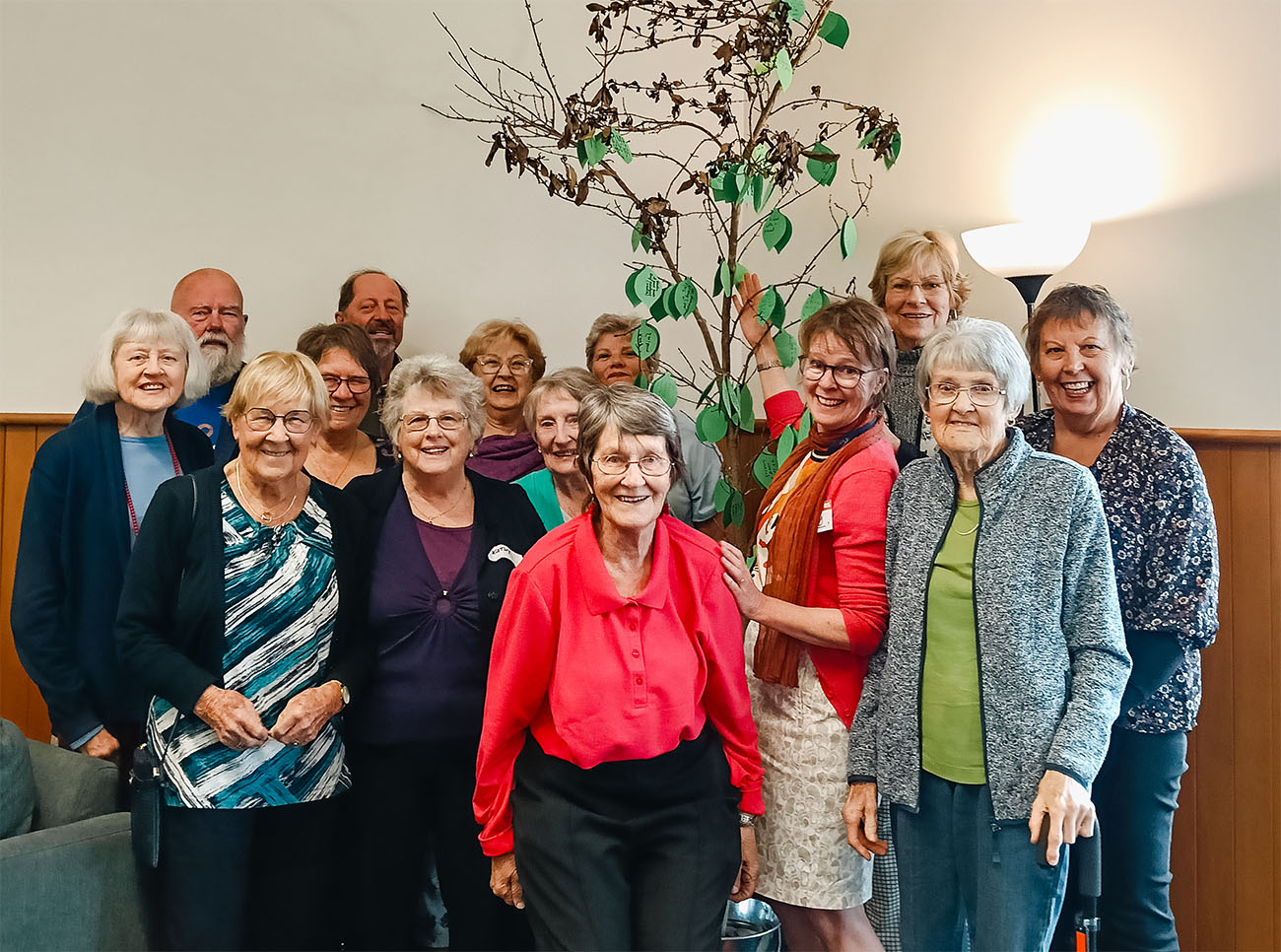
Gillian Bailey is the elder care worker at All Saints in Nelson. She found a cast-off branch in a garden, “on its way to becoming brown with crumpled leaves and lifeless twigs”, and re-purposed it, “giving it a new life and meaning”. Then she asked people to write about what brings them joy, gathering contributions from the youth group, seniors group, and the Sunday morning congregations to create the “Tree of Joy”.
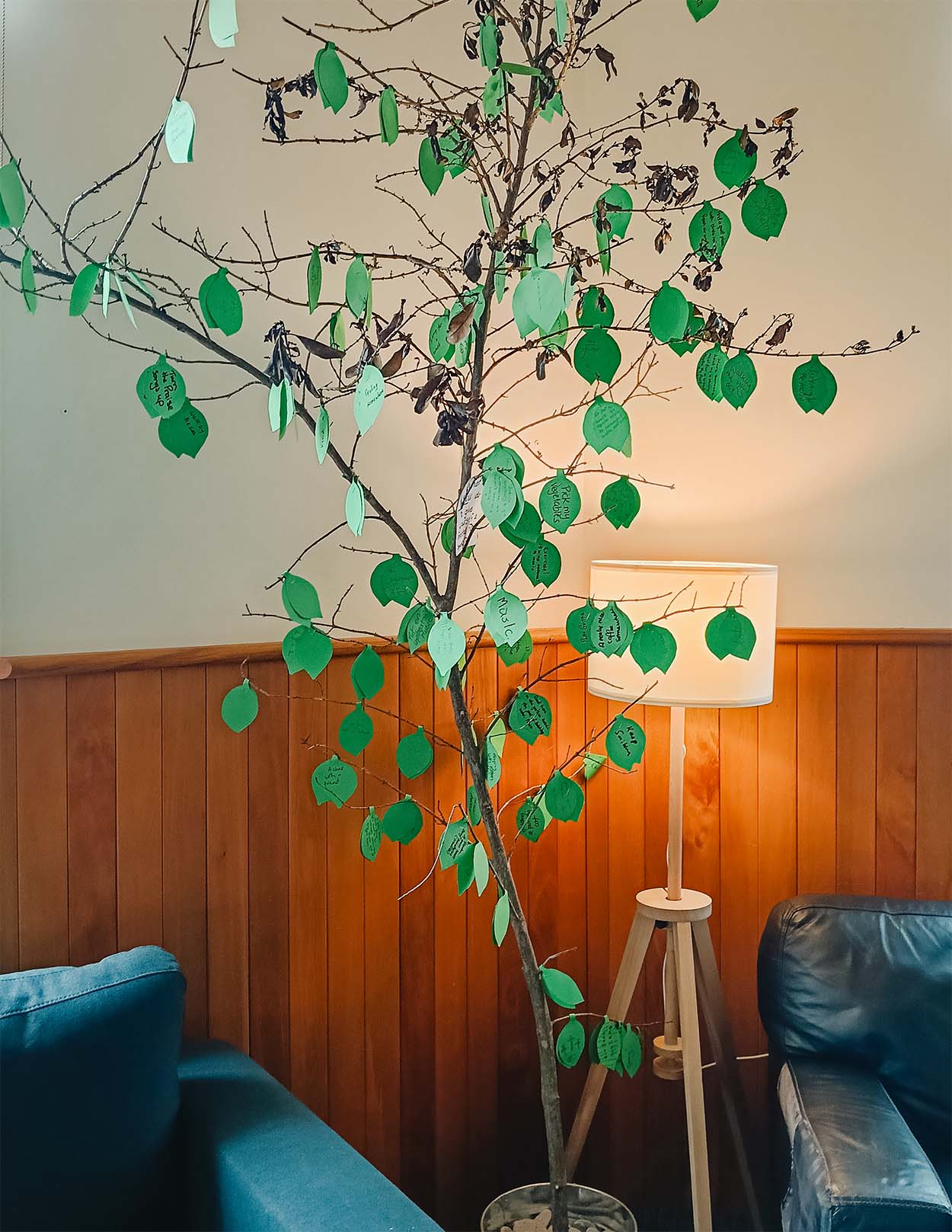
“Although the greening of our tree looks suspiciously like cardboard leaves,” she says, “they contain many secrets to well-being across many age groups.”
Among dozens of contributions were examples like “Long trail runs”, “Architecture”, “Playing with my kitten” and “In a boat – fishing”.
A seven-year-old also wanted to contribute. She wrote “Helping my little sister”. Then she wrote all the names of her family on her leaf too (with a little help). What a beautiful illustration this is of how special our family foundations are. It highlights that belonging is key at every age.
Gilly says that one person told her to leave the dead leaves on, because “side-by-side, the positives are all the sweeter because of those hard times”.
Those hard times are markers on our journey, and I love the fact that so many folks have contributed to our Tree of Joy to help us each on our way. It brings us together as community and family and says: “We get it. We understand.”
When I took this challenge to the Nelson Tasman Volunteer Rest Home Chaplains, the result was a beautiful woven whare that reflected the experiences and values of those who serve in rest homes.
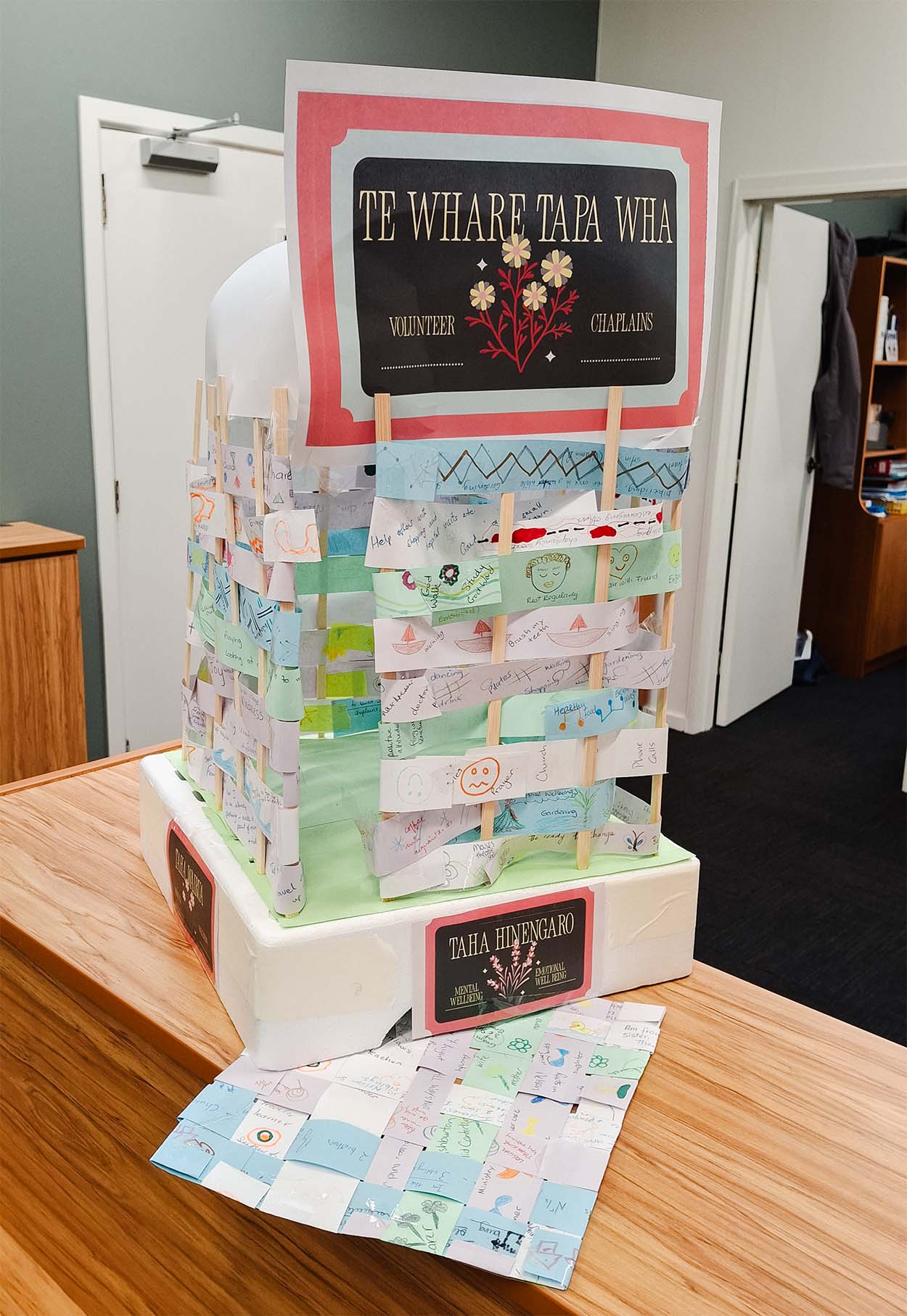
Each chaplain was given five strips of paper to decorate and write on.
The first strip represented our roots, the land and people that nurtured us. People wrote about their parents, siblings, children and where they came from. These strips were weaved into a mat.
The other four strips were for the four walls. I asked the chaplains to write what they did to strengthen each wall of their whare. For Taha Tinana, physical wellbeing, they wrote about things like healthy eating, walking, getting hairdos, gardening and even joining a marching team. For Taha Whānau, family and social wellbeing, chaplains wrote about talking to neighbours, joining interesting groups, sharing time with “great people”, singing, eating together around a table and hugging. For Taha Hinengaro, mental and emotional wellbeing, they offered examples like alone time, reading books, listening to music, crocheting, and “enjoying each day allotted to me”. And for Taha Wairua, spiritual wellbeing, they wrote of looking at God’s creation, reading the Bible, playing praise and worship, praying and being part of a church.
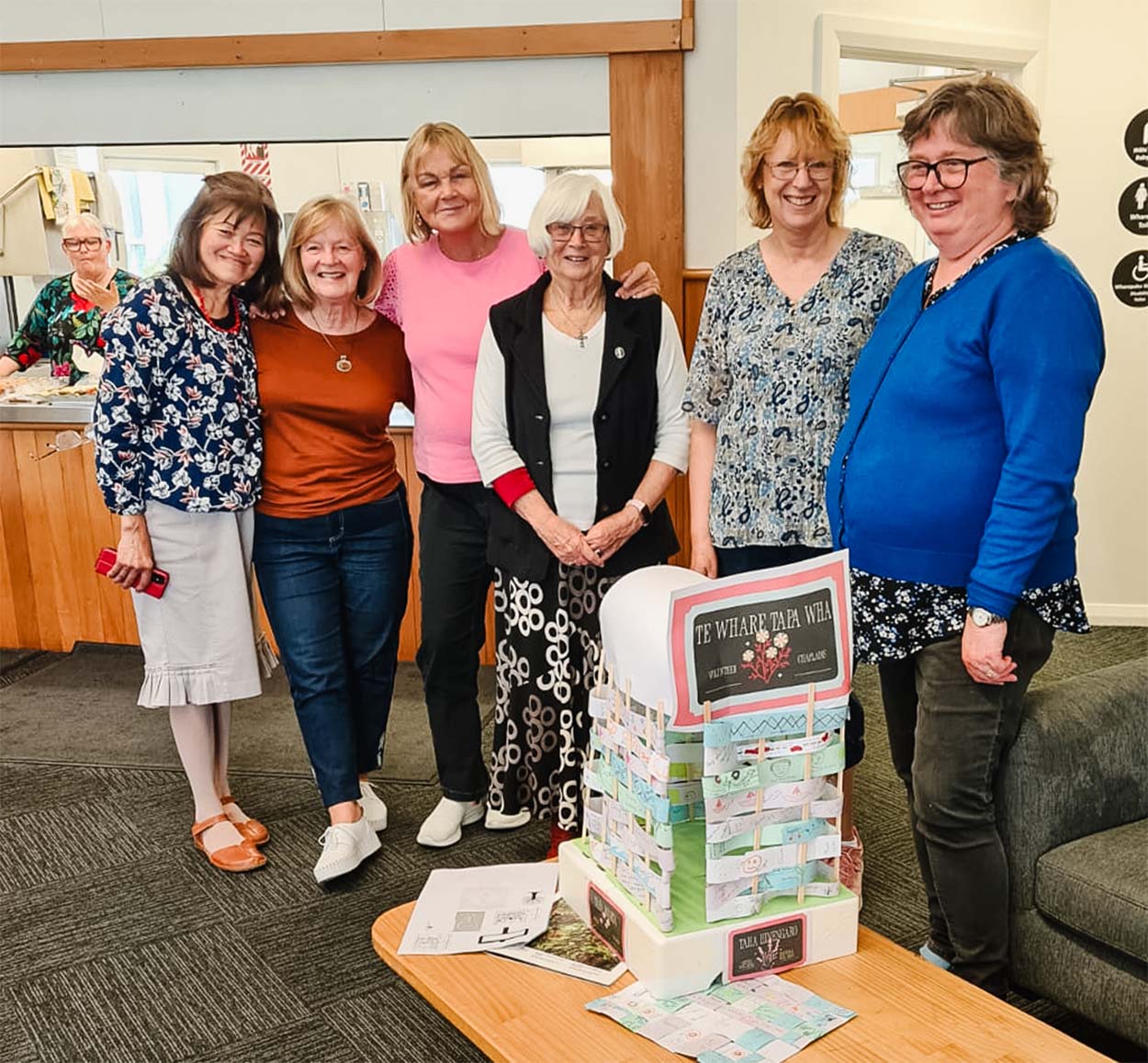
We created a whare by weaving our statements together. The real fun was had in talking about our strengthening habits. As the chaplains were writing, we shared ideas with each other and recognised that some activities fitted into multiple walls. Building the whare as a group event encouraged us to remember we’re not alone. It challenged us to keep our wellbeing habits and look for new ones too.
Strengthening wellbeing is a community effort, and together we can motivate each other to reinforce the walls of our whare.
Thank you to everyone who participated in this challenge – I hope it inspired you as much as it did me.
Check out other articles in the
series below.
More articles in the
series are to come.
We have invited these writers to share their experiences, ideas and opinions in the hope that these will provoke thought, challenge you to go deeper and inspire you to put your faith into action. These articles should not be taken as the official view of the Nelson Diocese on any particular matter.
Last month I challenged the diocese to consider the Te Whare Tapa Whā model for Mental Health Awareness Week. Developed in 1982 by Sir Mason Durie, this Māori model is a framework for understanding what helps people flourish. It helps us to consider wellbeing as four dimensions, all interconnected: Taha Hinengaro (mental and emotional), Taha Tinana (physical wellbeing) Taha Whānau (family and social wellbeing) and Taha Wairua (spiritual wellbeing).
I encouraged people to explore these four “walls” by creating their own models as a reflective exercise. Here are two I want to share.
Gillian Bailey is the elder care worker at All Saints in Nelson. She found a cast-off branch in a garden, “on its way to becoming brown with crumpled leaves and lifeless twigs”, and re-purposed it, “giving it a new life and meaning”. Then she asked people to write about what brings them joy, gathering contributions from the youth group, seniors group, and the Sunday morning congregations to create the “Tree of Joy”.
“Although the greening of our tree looks suspiciously like cardboard leaves,” she says, “they contain many secrets to well-being across many age groups.”
Among dozens of contributions were examples like “Long trail runs”, “Architecture”, “Playing with my kitten” and “In a boat – fishing”.
A seven-year-old also wanted to contribute. She wrote “Helping my little sister”. Then she wrote all the names of her family on her leaf too (with a little help). What a beautiful illustration this is of how special our family foundations are. It highlights that belonging is key at every age.
Gilly says that one person told her to leave the dead leaves on, because “side-by-side, the positives are all the sweeter because of those hard times”.
Those hard times are markers on our journey, and I love the fact that so many folks have contributed to our Tree of Joy to help us each on our way. It brings us together as community and family and says: “We get it. We understand.”
When I took this challenge to the Nelson Tasman Volunteer Rest Home Chaplains, the result was a beautiful woven whare that reflected the experiences and values of those who serve in rest homes.
Each chaplain was given five strips of paper to decorate and write on.
The first strip represented our roots, the land and people that nurtured us. People wrote about their parents, siblings, children and where they came from. These strips were weaved into a mat.
The other four strips were for the four walls. I asked the chaplains to write what they did to strengthen each wall of their whare. For Taha Tinana, physical wellbeing, they wrote about things like healthy eating, walking, getting hairdos, gardening and even joining a marching team. For Taha Whānau, family and social wellbeing, chaplains wrote about talking to neighbours, joining interesting groups, sharing time with “great people”, singing, eating together around a table and hugging. For Taha Hinengaro, mental and emotional wellbeing, they offered examples like alone time, reading books, listening to music, crocheting, and “enjoying each day allotted to me”. And for Taha Wairua, spiritual wellbeing, they wrote of looking at God’s creation, reading the Bible, playing praise and worship, praying and being part of a church.
We created a whare by weaving our statements together. The real fun was had in talking about our strengthening habits. As the chaplains were writing, we shared ideas with each other and recognised that some activities fitted into multiple walls. Building the whare as a group event encouraged us to remember we’re not alone. It challenged us to keep our wellbeing habits and look for new ones too.
Strengthening wellbeing is a community effort, and together we can motivate each other to reinforce the walls of our whare.
Thank you to everyone who participated in this challenge – I hope it inspired you as much as it did me.
Check out other articles in the
series below.
More articles in the
series are to come.