If you’re invested in youth work, there’s a good chance you’ve come across Zara Maslin. She’s worked for Attitude presenting in highschools, managed Korowai Tupu – the Professional Association for Youth Work in Aotearoa – and now teaches Laidlaw’s youth ministry papers (“the fun papers”, she calls them). All up, she has nearly 20 years of youth work experience.
If you’re looking at her portrait trying to do the math, yes, she started very young – she got involved in youth ministry at 15. By 17, she declared to her parents, “I want to be a youth worker for the rest of my life!”
Zara and her whānau live in Ōtautahi Christchurch, where her husband Matt is the vicar of St Aidan’s. They have two little girls.
I met Zara when she came to Nelson to present one of our Discipleship Pathway classes, Core Competencies, based on the Korowai Tupu framework. She’s a lot of fun to be around, but it’s easy to see she’s serious about her passion for good youth ministry.
Zara and I were shooting the breeze under the setting sun in Waikanae recently, and out of curiosity, I asked her where this passion came from.
“I think I'm the product of good youth ministry,” she replied. Then she qualified that by saying she’d also had a lot of “near misses” – moments that almost derailed a healthy youth ministry environment if not for the grace of God. Near misses that, unfortunately, are actual misses in many situations. Incidents and mistakes that undermine good youth ministry. It was those mistakes, she realised later, that usually don’t come from “stupidity” or sinister reasons – they’re the result of a lack of education and proper frameworks.
Mistakes are easily avoidable with a little training.
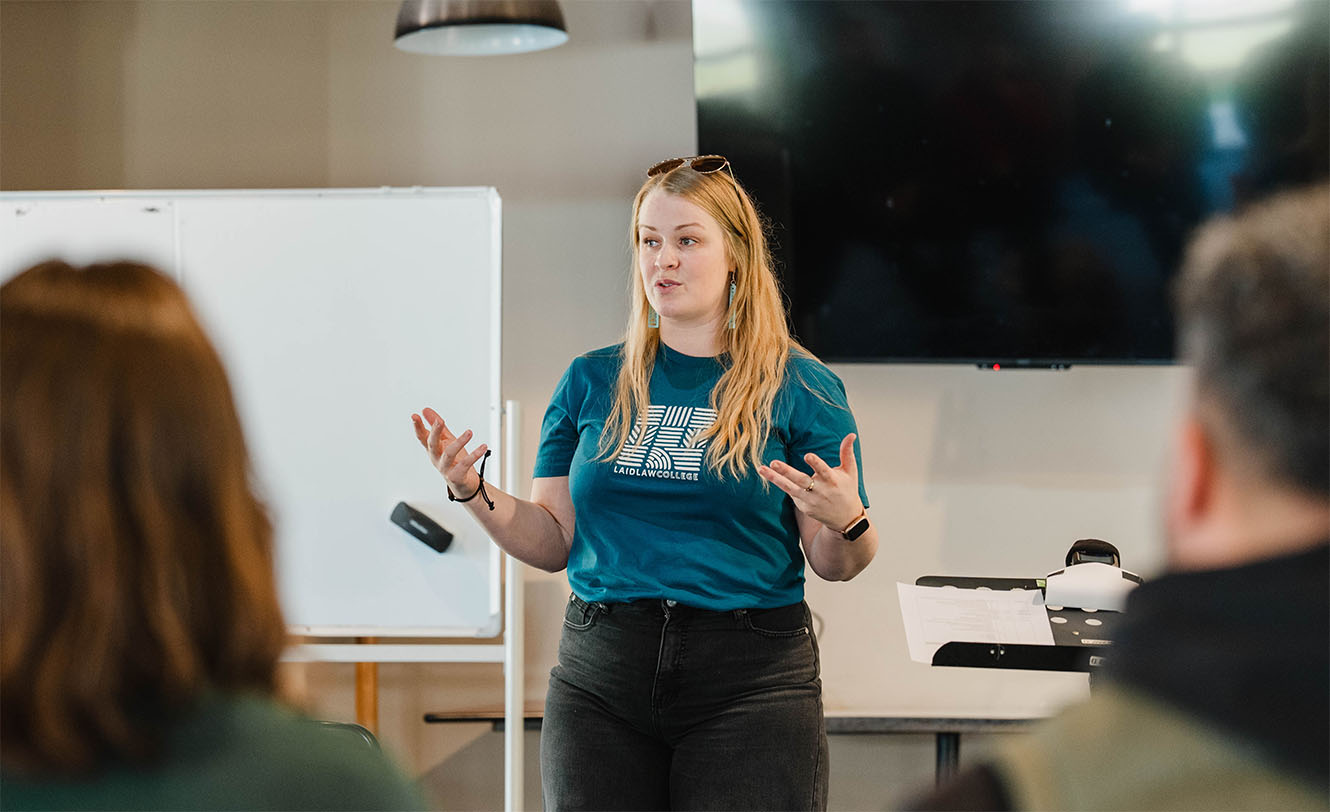
“We have some really good frameworks in place that can make a pumping youth ministry awesome,” she said, “I get to educate students on that and help them contextualise it for their own place. Because what works in a big city church in central Auckland might not work for a rural ministry in the middle of nowhere” – it’s important we note that Zara winked here – “like Nelson.”
(Actually, Nelson is the Big Smoke to a Greymouth girl like myself.)
Our conversation turned to what changes in youth ministry she’s noticed over her two decades of work.
One shift she noted is the demographic of people signing up for youth ministry papers. She would usually find those courses filled only with youth pastors, but more recently she has observed enrolments from people in other roles, from lay leaders to those on senior leadership in their churches. To Zara, it makes perfect sense: senior leaders empower youth leaders. “They're like, Well, why wouldn't I do a youth ministry paper? It's part of my church.”
Of course, the topic of mental health comes up.
According to the Ministry of Health, over half of all young New Zealanders experience anxiety or depression. The number of young people reporting moderate to high distress has almost doubled since 2017.1
One major source of anxiety, Zara said, is the constant, exhaustive awareness of the state of our world. “Youth leaders are dealing with the fallout of global politics which young people 20 years ago wouldn’t have had a clue about, but now it’s all around them. And it’s being sensationalised, pushed through algorithms that are designed to increase interaction.”
Youth today are facing a completely different world than the one that even Zara and I grew up in. We were in our teens when the first iPhone was introduced. Today’s youth don’t know a world without them.
Zara’s favourite course to teach is about the context of young people – the world that they live in.
“As a millennial, I’m part of the last generation to grow up without Wi-Fi. I can easy separate my ‘online life’ from my ‘offline life’. For Gen Z and Gen Alpha, there’s no separation. That Venn diagram is just a circle.”

Children in New Zealand get their first smartphone at an average age of 11. Our young people rank among the highest in the world for digital device usage, clocking around 42 hours a week.2
“There's a bit of misunderstanding around what it's like to grow up in a world that older people didn't grow up in.”
People tend to look around for who or what to blame – those young folk are on their phones far too much! Those parents give their kids phones far too young! Zara said the blame should fall on those who benefit from it all. “We should be blaming the corrupt people who created the algorithms that are manipulating people, who hired psychologists to make apps as addictive as possible, and who are profiting from all of that.”
It was all pretty heavy stuff. I didn’t realise I was holding my breath until I heaved a sigh and asked Zara, “Where’s the hope in all this?”
For the youth agonising over the state of the world, bombarded by endless exhibitions of violence and corruption, we have the privilege of sharing good news.
“Good youth ministry offers young people an opportunity to hear good news as well as participate in it. It provides a safe opportunity for young people to be the people of God together and experience what it means to be a beloved member of a divine family. It doesn't take away the doom of the world, but it does give opportunity to experience the world in a different way. A way where together, we figure out how to live where the last are first and the first are last, a way where we bless those who are poor in spirit and we remember that Jesus suffered alongside those who are suffering. We bring so much more than another story to add to the noise. We bring an open invite to join in.”
1 "New survey shows youth mental distress skyrocketing", Mental Health Foundation, 19 June 2024.
2 "Why We Need a Smartphone-Free Childhood", Katrina Colombié, Sep 16, 2025.
Check out other articles in the
series below.
More articles in the
series are to come.
We have invited these writers to share their experiences, ideas and opinions in the hope that these will provoke thought, challenge you to go deeper and inspire you to put your faith into action. These articles should not be taken as the official view of the Nelson Diocese on any particular matter.
If you’re invested in youth work, there’s a good chance you’ve come across Zara Maslin. She’s worked for Attitude presenting in highschools, managed Korowai Tupu – the Professional Association for Youth Work in Aotearoa – and now teaches Laidlaw’s youth ministry papers (“the fun papers”, she calls them). All up, she has nearly 20 years of youth work experience.
If you’re looking at her portrait trying to do the math, yes, she started very young – she got involved in youth ministry at 15. By 17, she declared to her parents, “I want to be a youth worker for the rest of my life!”
Zara and her whānau live in Ōtautahi Christchurch, where her husband Matt is the vicar of St Aidan’s. They have two little girls.
I met Zara when she came to Nelson to present one of our Discipleship Pathway classes, Core Competencies, based on the Korowai Tupu framework. She’s a lot of fun to be around, but it’s easy to see she’s serious about her passion for good youth ministry.
Zara and I were shooting the breeze under the setting sun in Waikanae recently, and out of curiosity, I asked her where this passion came from.
“I think I'm the product of good youth ministry,” she replied. Then she qualified that by saying she’d also had a lot of “near misses” – moments that almost derailed a healthy youth ministry environment if not for the grace of God. Near misses that, unfortunately, are actual misses in many situations. Incidents and mistakes that undermine good youth ministry. It was those mistakes, she realised later, that usually don’t come from “stupidity” or sinister reasons – they’re the result of a lack of education and proper frameworks.
Mistakes are easily avoidable with a little training.
“We have some really good frameworks in place that can make a pumping youth ministry awesome,” she said, “I get to educate students on that and help them contextualise it for their own place. Because what works in a big city church in central Auckland might not work for a rural ministry in the middle of nowhere” – it’s important we note that Zara winked here – “like Nelson.”
(Actually, Nelson is the Big Smoke to a Greymouth girl like myself.)
Our conversation turned to what changes in youth ministry she’s noticed over her two decades of work.
One shift she noted is the demographic of people signing up for youth ministry papers. She would usually find those courses filled only with youth pastors, but more recently she has observed enrolments from people in other roles, from lay leaders to those on senior leadership in their churches. To Zara, it makes perfect sense: senior leaders empower youth leaders. “They're like, Well, why wouldn't I do a youth ministry paper? It's part of my church.”
Of course, the topic of mental health comes up.
According to the Ministry of Health, over half of all young New Zealanders experience anxiety or depression. The number of young people reporting moderate to high distress has almost doubled since 2017.1
One major source of anxiety, Zara said, is the constant, exhaustive awareness of the state of our world. “Youth leaders are dealing with the fallout of global politics which young people 20 years ago wouldn’t have had a clue about, but now it’s all around them. And it’s being sensationalised, pushed through algorithms that are designed to increase interaction.”
Youth today are facing a completely different world than the one that even Zara and I grew up in. We were in our teens when the first iPhone was introduced. Today’s youth don’t know a world without them.
Zara’s favourite course to teach is about the context of young people – the world that they live in.
“As a millennial, I’m part of the last generation to grow up without Wi-Fi. I can easy separate my ‘online life’ from my ‘offline life’. For Gen Z and Gen Alpha, there’s no separation. That Venn diagram is just a circle.”
Children in New Zealand get their first smartphone at an average age of 11. Our young people rank among the highest in the world for digital device usage, clocking around 42 hours a week.2
“There's a bit of misunderstanding around what it's like to grow up in a world that older people didn't grow up in.”
People tend to look around for who or what to blame – those young folk are on their phones far too much! Those parents give their kids phones far too young! Zara said the blame should fall on those who benefit from it all. “We should be blaming the corrupt people who created the algorithms that are manipulating people, who hired psychologists to make apps as addictive as possible, and who are profiting from all of that.”
It was all pretty heavy stuff. I didn’t realise I was holding my breath until I heaved a sigh and asked Zara, “Where’s the hope in all this?”
For the youth agonising over the state of the world, bombarded by endless exhibitions of violence and corruption, we have the privilege of sharing good news.
“Good youth ministry offers young people an opportunity to hear good news as well as participate in it. It provides a safe opportunity for young people to be the people of God together and experience what it means to be a beloved member of a divine family. It doesn't take away the doom of the world, but it does give opportunity to experience the world in a different way. A way where together, we figure out how to live where the last are first and the first are last, a way where we bless those who are poor in spirit and we remember that Jesus suffered alongside those who are suffering. We bring so much more than another story to add to the noise. We bring an open invite to join in.”
Check out other articles in the
series below.
More articles in the
series are to come.