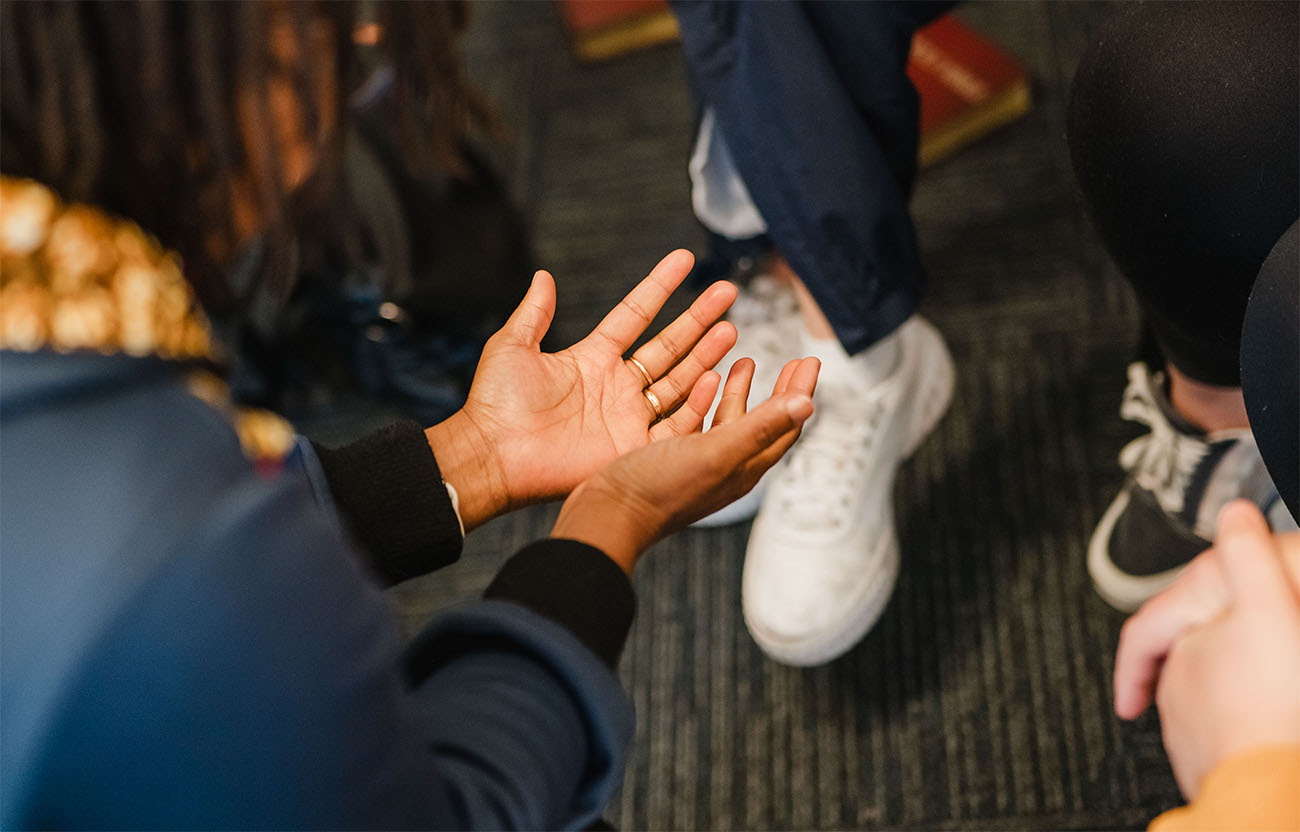
Next week churches from across our diocese, and all of Aotearoa, will join with the global church in a week of non-stop prayer for every nation on Earth.
Prayer is a funny thing for our church. Throughout history, every big move of God and every revival has been preceded by a faithful group of passionate prayers. Prayer speaks to the need to have a posture of humility, the desire to enjoy God’s company, an openness to have our hearts transformed by the Spirit, and an awareness that God leads the way in the in-breaking of his kingdom – not us.
We get it! Prayer is important!
And yet intentional prayer also seems to be one of the hardest things for most of us to engage with – both personally, and as church communities.
Clint Ussher, our keynote speaker at this year’s Emmaus gatherings, shared how, despite his own church’s priority on prayer, it was hard going. It was a faithful few who tended to turn up week after week to pray for God’s kingdom to come.
But I don’t think we should be discouraged by any of this. If anything perhaps it proof that prayer is so important, and that praying is contested ground in the life of our church.
And so it’s exciting to see a number of our parishes intentionally pushing into this area of prayer. Motukea Parish, led by new vicars Andrew and Emily Spence, have opened up a number of different spaces for their people to engage more intentionally in group prayer: online on Monday nights, in person on Wednesday mornings, and an existing small group who have begun to use their gatherings as a place to primarily pray together.
“As we look to the future as a parish, we realised that to be able to discern a vision together we first had to pray about our community. We are looking for God to move here in Motueka and therefore we have to pray about it and seek God’s will,” says Andy. “Nothing can happen without Jesus. We are not in charge of the kingdom of God – he is. Therefore as a parish we are hoping to tap into that and discern together what God has in store for our parish.”
One of the challenges with group prayer can be the “how do we do this?” question. Especially when different people like so many different ways of praying. Some want to sit in silence, some want to dance with flags, others want to freely intercede against the powers, and others want prefer a more liturgical approach.
“We knew we needed some structure – something to hold us together, something to reflect on continually while also providing words when we don’t have any to pray,” shares Andy. “Our prayer gatherings normally use an Anglican-style devotional liturgy, adapted and written in more 2026 language, with spaces in between to share our own personal prayers of confession, for others, and thanksgivings. We also read scripture together when we gather, sometimes having a discussion on the passage.”
At Waimea Parish in Brightwater, Brad Wood has been experimenting with putting more focus on prayer.
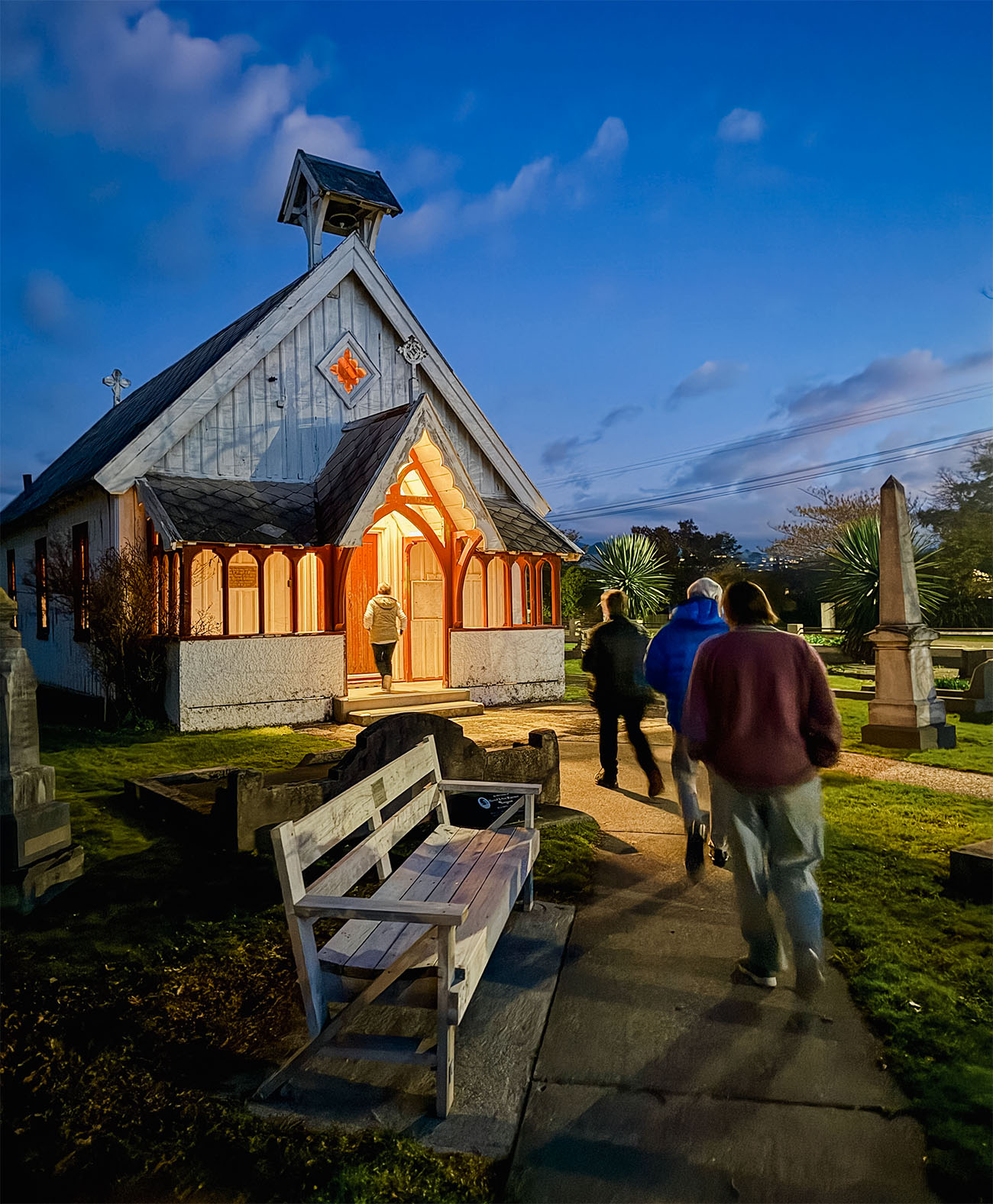
“Starting this this term we’ve been gathering for evening prayers in the St Paul’s chapel. We meet for a shared meal at 5pm in the parish hall, then move across to the chapel for prayer. The prayers are hosted by the Sunday Live community, but they’re open to anyone from the parish or wider community who would like to join us.”
What inspired the decision to make regular prayer happen at Brightwater?
“The first is simply that I love prayer,” says Brad, “and I want to pass on that passion within the parish. I really want to grow a praying culture here at Waimea. There is something deeply life-giving about drawing near to Jesus, bringing before him the things that are on our hearts, and allowing him to shape and transform us in those spaces of abiding.”
I also want to see our parish grow, God willing, and I think prayer is one of the hallmarks of churches that are healthy and growing. When we seek God earnestly and grow in a healthy, fruitful relationship with him, things begin to move. The Holy Spirit moves, and people are drawn towards places that are alive in the Spirit. So for me, prayer is both deeply good for us as disciples and absolutely foundational to the mission and growth of the church.
So what does it look like when Waimea gets together to pray? Brad says:
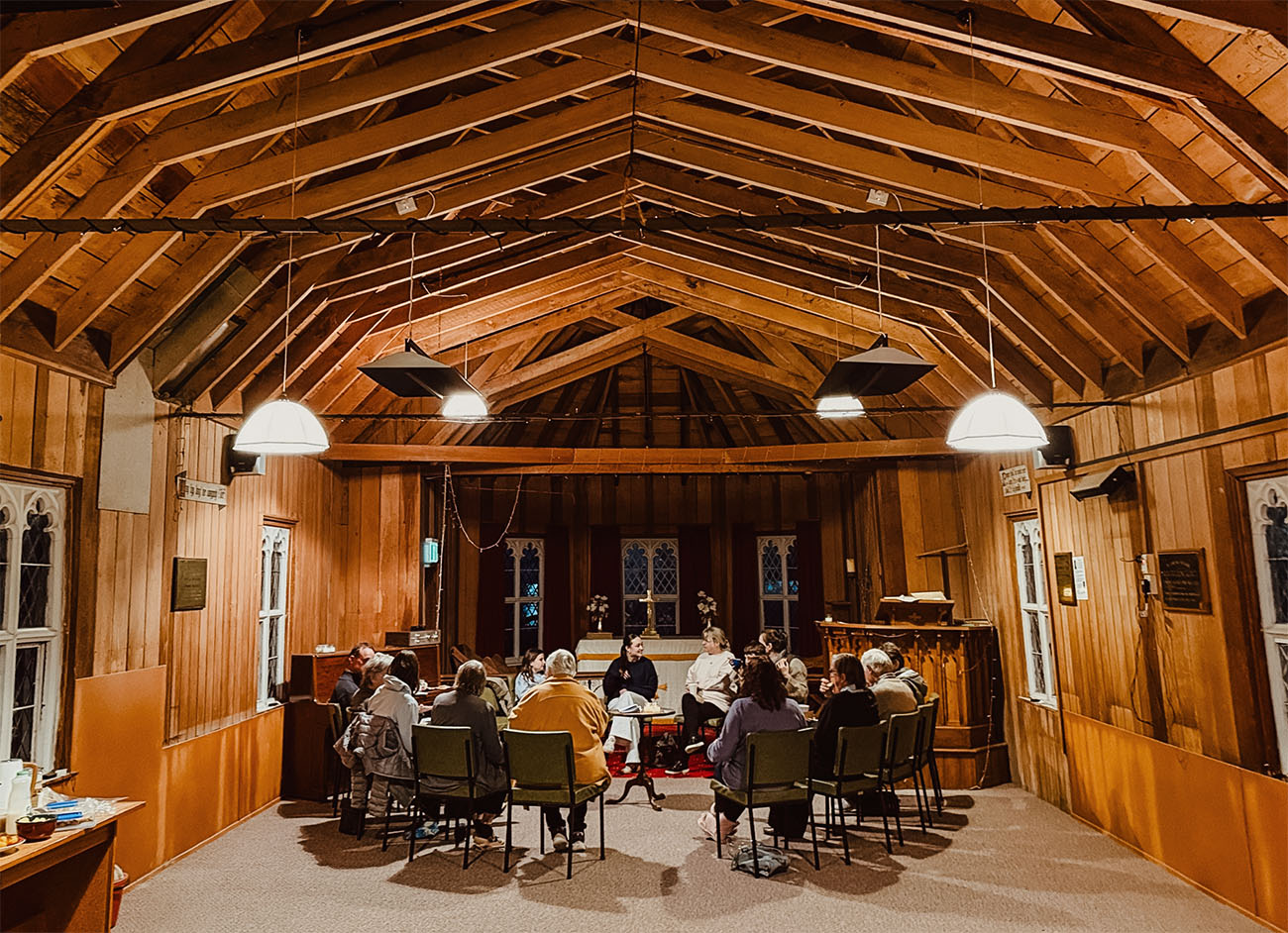
Our gatherings are really simple. We’re very blessed to have the chapel at St Paul’s, which we can set aside as a dedicated space for prayer. We usually have an urn going, a few different drinks available, and often some baking or supper. People arrive from around 6pm, make a cup of tea, and settle in. At 6:15pm we begin with Evening Prayer from the prayer book. We create space for people to share prayer needs for themselves or for others, and then we pray together for that person or situation. We also have a time where I simply invite people to say the name of someone who is on their heart – no explanation is needed, just their name. I’ve found that really helpful because it makes spoken prayer accessible. Some people who come don’t yet feel confident praying out loud, but everyone can say a person’s name. You don’t need to be eloquent or have the right words. It has become a really gentle way of helping people take their first steps into a more personal and shared life of prayer. The whole gathering is very simple and usually takes around 45 minutes. That simplicity is part of what I love about it. There doesn’t need to be anything complicated about gathering together, drawing near to Jesus, and praying.
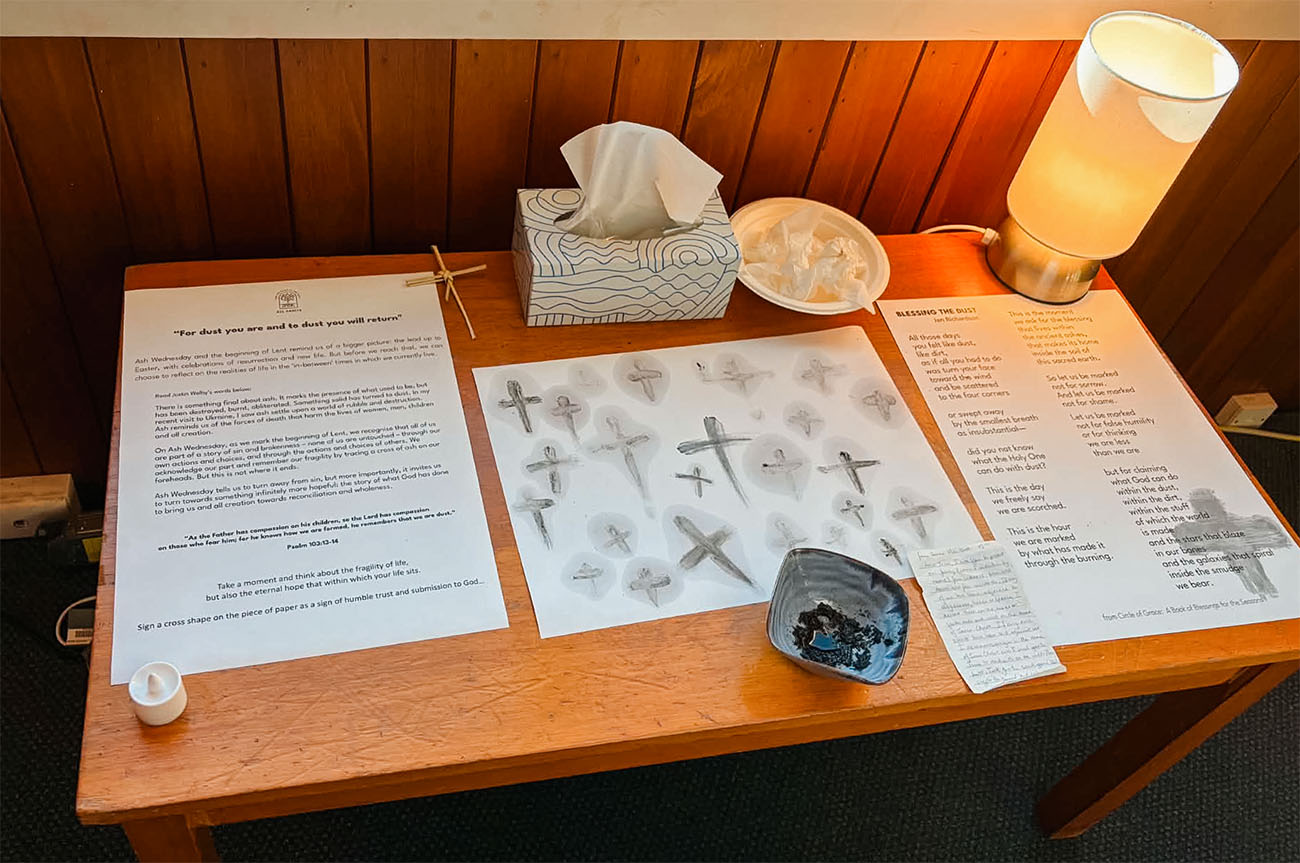
All Saints in Nelson has been dialling up its priority on prayer for quite a while now – and they have a longer prayer event coming up as part of the Global Week of Prayer.
“We’ve been trying to be creative in the way that we pray, experimenting with different ways of praying,” says vicar Tim Bustin. “We’ve set up prayer rooms for 48 hours of prayer, with a focus on praying for the ministry of the church, and for our city and its needs. Prayer is a key part of how we encounter God, so it’s just not an option! It’s a space in which God speaks, and where he often changes our hearts as we pray.”
So why does Tim think gathering to pray together is important for parish life?
Tim takes inspiration from the words of Karl Barth, who said that “to clasp the hands in prayer is the beginning of an uprising against the disorder of the world.”
“That’s what we get to be part of as we pray, praying that God will meet us and make a difference.” shares Tim. “It’s a joy doing it in community, because we hear each other’s hearts and build each other’s faith.”
Our clergy have just gathered this afternoon on Zoom for a time of prayer in the lead up to the Global Week of Prayer too. It’s a way to use technology to connect as leaders across the diocese – and not just talk about skills and tactics, but to offer our hopes and concerns to God, who shares our longings and worries.
There are so many ways to pray together as parishes. It doesn’t need to be complicated or fancy. Even two friends over coffee can take some time to pray.
So what could your community do to participate with the global week of prayer next week?
Check out other articles in the
series below.
More articles in the
series are to come.
We have invited these writers to share their experiences, ideas and opinions in the hope that these will provoke thought, challenge you to go deeper and inspire you to put your faith into action. These articles should not be taken as the official view of the Nelson Diocese on any particular matter.
Next week churches from across our diocese, and all of Aotearoa, will join with the global church in a week of non-stop prayer for every nation on Earth.
Prayer is a funny thing for our church. Throughout history, every big move of God and every revival has been preceded by a faithful group of passionate prayers. Prayer speaks to the need to have a posture of humility, the desire to enjoy God’s company, an openness to have our hearts transformed by the Spirit, and an awareness that God leads the way in the in-breaking of his kingdom – not us.
We get it! Prayer is important!
And yet intentional prayer also seems to be one of the hardest things for most of us to engage with – both personally, and as church communities.
Clint Ussher, our keynote speaker at this year’s Emmaus gatherings, shared how, despite his own church’s priority on prayer, it was hard going. It was a faithful few who tended to turn up week after week to pray for God’s kingdom to come.
But I don’t think we should be discouraged by any of this. If anything perhaps it proof that prayer is so important, and that praying is contested ground in the life of our church.
And so it’s exciting to see a number of our parishes intentionally pushing into this area of prayer. Motukea Parish, led by new vicars Andrew and Emily Spence, have opened up a number of different spaces for their people to engage more intentionally in group prayer: online on Monday nights, in person on Wednesday mornings, and an existing small group who have begun to use their gatherings as a place to primarily pray together.
“As we look to the future as a parish, we realised that to be able to discern a vision together we first had to pray about our community. We are looking for God to move here in Motueka and therefore we have to pray about it and seek God’s will,” says Andy. “Nothing can happen without Jesus. We are not in charge of the kingdom of God – he is. Therefore as a parish we are hoping to tap into that and discern together what God has in store for our parish.”
One of the challenges with group prayer can be the “how do we do this?” question. Especially when different people like so many different ways of praying. Some want to sit in silence, some want to dance with flags, others want to freely intercede against the powers, and others want prefer a more liturgical approach.
“We knew we needed some structure – something to hold us together, something to reflect on continually while also providing words when we don’t have any to pray,” shares Andy. “Our prayer gatherings normally use an Anglican-style devotional liturgy, adapted and written in more 2026 language, with spaces in between to share our own personal prayers of confession, for others, and thanksgivings. We also read scripture together when we gather, sometimes having a discussion on the passage.”
At Waimea Parish in Brightwater, Brad Wood has been experimenting with putting more focus on prayer.
“Starting this this term we’ve been gathering for evening prayers in the St Paul’s chapel. We meet for a shared meal at 5pm in the parish hall, then move across to the chapel for prayer. The prayers are hosted by the Sunday Live community, but they’re open to anyone from the parish or wider community who would like to join us.”
What inspired the decision to make regular prayer happen at Brightwater?
“The first is simply that I love prayer,” says Brad, “and I want to pass on that passion within the parish. I really want to grow a praying culture here at Waimea. There is something deeply life-giving about drawing near to Jesus, bringing before him the things that are on our hearts, and allowing him to shape and transform us in those spaces of abiding.”
I also want to see our parish grow, God willing, and I think prayer is one of the hallmarks of churches that are healthy and growing. When we seek God earnestly and grow in a healthy, fruitful relationship with him, things begin to move. The Holy Spirit moves, and people are drawn towards places that are alive in the Spirit. So for me, prayer is both deeply good for us as disciples and absolutely foundational to the mission and growth of the church.
So what does it look like when Waimea gets together to pray? Brad says:
Our gatherings are really simple. We’re very blessed to have the chapel at St Paul’s, which we can set aside as a dedicated space for prayer. We usually have an urn going, a few different drinks available, and often some baking or supper. People arrive from around 6pm, make a cup of tea, and settle in. At 6:15pm we begin with Evening Prayer from the prayer book. We create space for people to share prayer needs for themselves or for others, and then we pray together for that person or situation. We also have a time where I simply invite people to say the name of someone who is on their heart – no explanation is needed, just their name. I’ve found that really helpful because it makes spoken prayer accessible. Some people who come don’t yet feel confident praying out loud, but everyone can say a person’s name. You don’t need to be eloquent or have the right words. It has become a really gentle way of helping people take their first steps into a more personal and shared life of prayer. The whole gathering is very simple and usually takes around 45 minutes. That simplicity is part of what I love about it. There doesn’t need to be anything complicated about gathering together, drawing near to Jesus, and praying.
All Saints in Nelson has been dialling up its priority on prayer for quite a while now – and they have a longer prayer event coming up as part of the Global Week of Prayer.
“We’ve been trying to be creative in the way that we pray, experimenting with different ways of praying,” says vicar Tim Bustin. “We’ve set up prayer rooms for 48 hours of prayer, with a focus on praying for the ministry of the church, and for our city and its needs. Prayer is a key part of how we encounter God, so it’s just not an option! It’s a space in which God speaks, and where he often changes our hearts as we pray.”
So why does Tim think gathering to pray together is important for parish life?
Tim takes inspiration from the words of Karl Barth, who said that “to clasp the hands in prayer is the beginning of an uprising against the disorder of the world.”
“That’s what we get to be part of as we pray, praying that God will meet us and make a difference.” shares Tim. “It’s a joy doing it in community, because we hear each other’s hearts and build each other’s faith.”
Our clergy have just gathered this afternoon on Zoom for a time of prayer in the lead up to the Global Week of Prayer too. It’s a way to use technology to connect as leaders across the diocese – and not just talk about skills and tactics, but to offer our hopes and concerns to God, who shares our longings and worries.
There are so many ways to pray together as parishes. It doesn’t need to be complicated or fancy. Even two friends over coffee can take some time to pray.
So what could your community do to participate with the global week of prayer next week?
Check out other articles in the
series below.
More articles in the
series are to come.