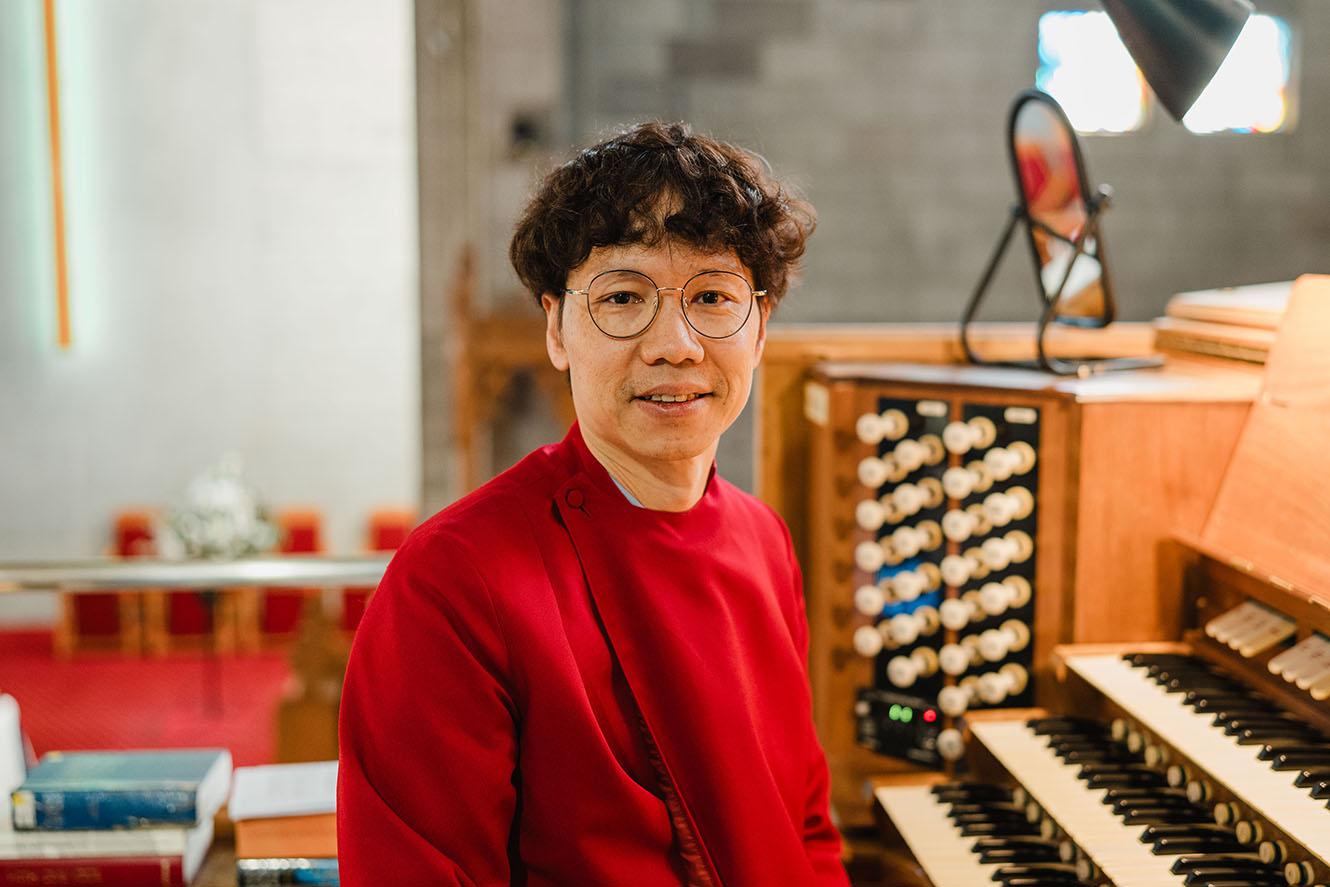
Born in Hong Kong, I grew up in a Catholic family where my father was a choral director, so we went to church together every Sunday. Having started my lessons on the piano from the age of five, I developed a deep passion in music, and later on the organ particularly, when I got the chance to sit next to the organist at the time. I was amazed at his skills between multiple keyboards and the pedalboard. My first formal organ teacher was a priest, who was integral to training many church musicians back then. I moved to New Zealand with my family about 30 years ago. My exposure to the organ world continued with many opportunities to meet with different organists and to join the local organist community, which further facilitated my learning different repertoire and my knowledge of how organs work in a building. Besides the music education I received at university, I consider myself a regular attending organ recitals and masterclasses by concert organists from around the world, which provided much precious experience and inspiration for the betterment of my ongoing studies in the subject.
What impressed me the most was the acoustics of the organ, which is capable of filling the largest room in the world, and of effectively leading hymn-singing. The timbre of the organ is so unique that stirs our soul and lifts up our heart to higher realms. Ranging from the softest string and flute stops to the loudest, commanding fanfare trumpet, the kind of sound that is generated by the instrument allows for the rendition of almost every genre of music, from early classicals to recent movie themes. Its sonority and contrasting dynamics are therefore considered the “key success factors” of music production, in my opinion.
I love the organ so much that as I took the bus to school every day, I used to put on earphones to listen to various famous organ repertoire. I can’t remember how many times it was played. Over time, those melodies and harmonies were imprinted on my mind forever.
This deep, spiritual experience is to be encountered by oneself, beyond mental speculation, beyond worldly languages. This is how God works through music, I believe. Of course, I do highly respect other church music traditions – many are inspired by contemporary church music that connects with them – but call me old-school, I usually prefer the organ, and that's why I am here. From time to time while I was practising in church, I have seen people come in and sit quietly in the pews with their eyes closed, almost in trance.
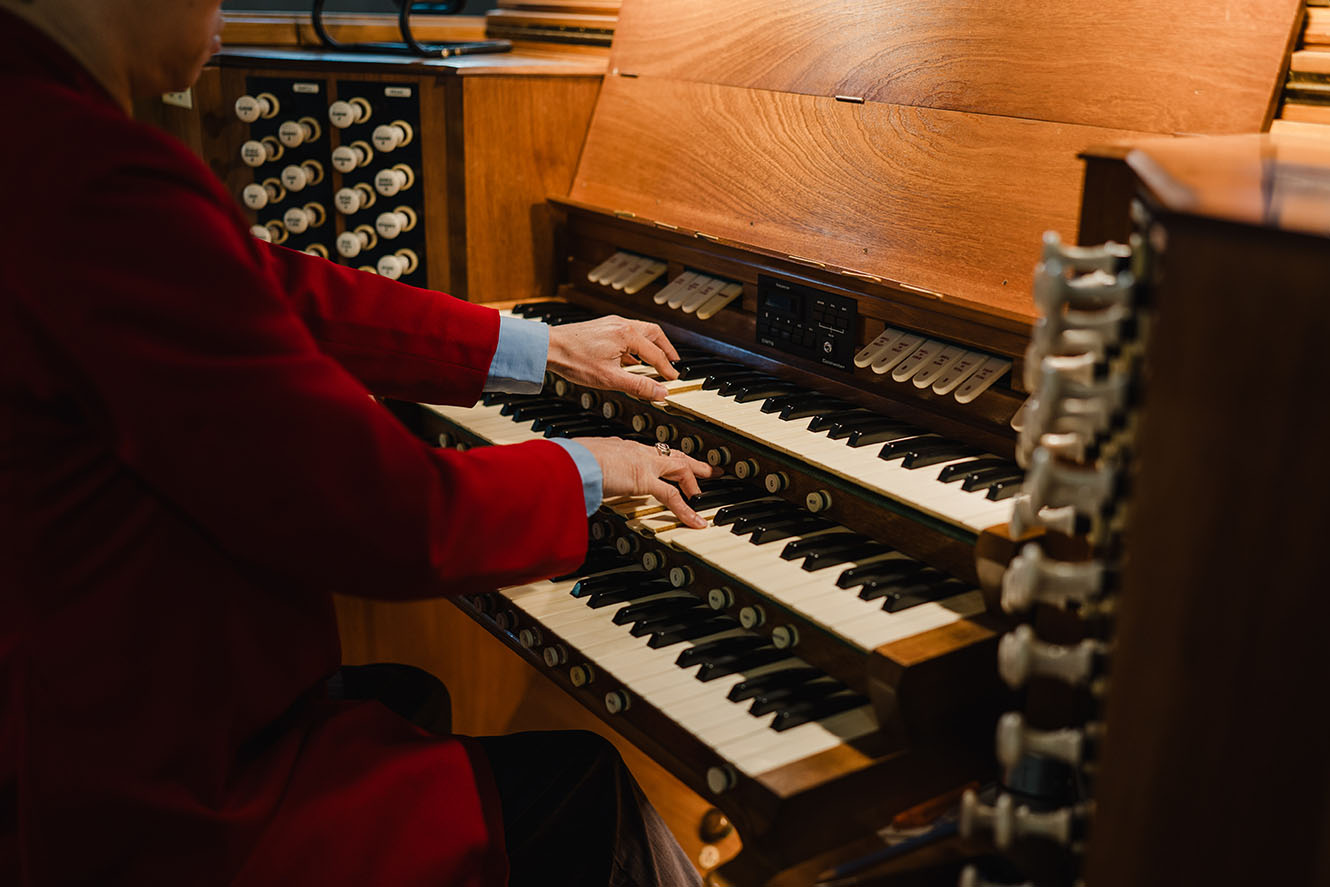
As an organist in the cathedral, I feel that it is somehow our mission to keep the beautiful and long-standing church music tradition going, at least with my limited capacity from the organ bench. After spending some years at the Holy Trinity Cathedral and a major Anglican church in Auckland, the city of Nelson emerged as being a quiet and peaceful town where music is highly valued and appreciated. In fact, Nelson is probably one of the few places in the country where a cathedral and a well-established music school can be found in one place.
J. S. Bach is undeniably my favourite composer. As the most prolific and historically significant figure writing for the organ, Bach composed a massive number of works, including his “chorale preludes” that encompass the seasons of the liturgical calendar, while certain fragments of his compositions were adopted in movies and other settings throughout the centuries. The organ music of several French composers, like Louis Vierne, also poses a similar yet unparalleled attraction to me, owing to its vibrant colors, theatrical expression, highly specific registration instructions, and a rich, symphonic soundscape. The Finale of Vierne's first Organ Symphony is one of my favourites, which I remember was used to conclude the weekly “Hour of Power” TV broadcast before they moved out of the monumental “Crystal Cathedral” in California.
The great Mozart was moved to write: “In my eyes and ears, the organ will always be the king of instruments”. For centuries the organ has settled through experience and sheer practicality as being the ideal and complete instrument to lead, support and blend with human voices in worship and praise. The art and skill of the organist is to interpret the music, and inspire the congregation to in turn express in singing the spirit and inspiration of the hymn or psalm as the writer intended.
Lastly, may I share with you the following poem by John Milton:
There let the pealing organ blow
To the full voiced choir below,
In service high, and anthems clear,
As may with sweetness fill mine ear,
Dissolve me into ecstasies,
And bring all heaven before mine eyes.
May the God of hope inspire us all, as we lift up our hearts in worship and meditation. I would be most grateful for your continued support and prayers for the music ministries, at the cathedral and across our diocese.
When in our music God is glorified.
Check out other articles in the
series below.
More articles in the
series are to come.
We have invited these writers to share their experiences, ideas and opinions in the hope that these will provoke thought, challenge you to go deeper and inspire you to put your faith into action. These articles should not be taken as the official view of the Nelson Diocese on any particular matter.
Born in Hong Kong, I grew up in a Catholic family where my father was a choral director, so we went to church together every Sunday. Having started my lessons on the piano from the age of five, I developed a deep passion in music, and later on the organ particularly, when I got the chance to sit next to the organist at the time. I was amazed at his skills between multiple keyboards and the pedalboard. My first formal organ teacher was a priest, who was integral to training many church musicians back then. I moved to New Zealand with my family about 30 years ago. My exposure to the organ world continued with many opportunities to meet with different organists and to join the local organist community, which further facilitated my learning different repertoire and my knowledge of how organs work in a building. Besides the music education I received at university, I consider myself a regular attending organ recitals and masterclasses by concert organists from around the world, which provided much precious experience and inspiration for the betterment of my ongoing studies in the subject.
What impressed me the most was the acoustics of the organ, which is capable of filling the largest room in the world, and of effectively leading hymn-singing. The timbre of the organ is so unique that stirs our soul and lifts up our heart to higher realms. Ranging from the softest string and flute stops to the loudest, commanding fanfare trumpet, the kind of sound that is generated by the instrument allows for the rendition of almost every genre of music, from early classicals to recent movie themes. Its sonority and contrasting dynamics are therefore considered the “key success factors” of music production, in my opinion.
I love the organ so much that as I took the bus to school every day, I used to put on earphones to listen to various famous organ repertoire. I can’t remember how many times it was played. Over time, those melodies and harmonies were imprinted on my mind forever.
This deep, spiritual experience is to be encountered by oneself, beyond mental speculation, beyond worldly languages. This is how God works through music, I believe. Of course, I do highly respect other church music traditions – many are inspired by contemporary church music that connects with them – but call me old-school, I usually prefer the organ, and that's why I am here. From time to time while I was practising in church, I have seen people come in and sit quietly in the pews with their eyes closed, almost in trance.
As an organist in the cathedral, I feel that it is somehow our mission to keep the beautiful and long-standing church music tradition going, at least with my limited capacity from the organ bench. After spending some years at the Holy Trinity Cathedral and a major Anglican church in Auckland, the city of Nelson emerged as being a quiet and peaceful town where music is highly valued and appreciated. In fact, Nelson is probably one of the few places in the country where a cathedral and a well-established music school can be found in one place.
J. S. Bach is undeniably my favourite composer. As the most prolific and historically significant figure writing for the organ, Bach composed a massive number of works, including his “chorale preludes” that encompass the seasons of the liturgical calendar, while certain fragments of his compositions were adopted in movies and other settings throughout the centuries. The organ music of several French composers, like Louis Vierne, also poses a similar yet unparalleled attraction to me, owing to its vibrant colors, theatrical expression, highly specific registration instructions, and a rich, symphonic soundscape. The Finale of Vierne's first Organ Symphony is one of my favourites, which I remember was used to conclude the weekly “Hour of Power” TV broadcast before they moved out of the monumental “Crystal Cathedral” in California.
The great Mozart was moved to write: “In my eyes and ears, the organ will always be the king of instruments”. For centuries the organ has settled through experience and sheer practicality as being the ideal and complete instrument to lead, support and blend with human voices in worship and praise. The art and skill of the organist is to interpret the music, and inspire the congregation to in turn express in singing the spirit and inspiration of the hymn or psalm as the writer intended.
Lastly, may I share with you the following poem by John Milton:
There let the pealing organ blow
To the full voiced choir below,
In service high, and anthems clear,
As may with sweetness fill mine ear,
Dissolve me into ecstasies,
And bring all heaven before mine eyes.
May the God of hope inspire us all, as we lift up our hearts in worship and meditation. I would be most grateful for your continued support and prayers for the music ministries, at the cathedral and across our diocese.
When in our music God is glorified.
Check out other articles in the
series below.
More articles in the
series are to come.