We're thinking about mission opportunities at the moment – about the positive sides of being Anglican in this particular cultural moment. Simon Martin likes to say this Anglican boat is a good boat to fish from, and I think he's right! We don't need to shy away from being Anglican.
To explore that, I've invited three of our clergy to chat about it – Jude Saxon, deacon at St Barnabas, Matt Watts, vicar of Buller Parish, and Glen Ashworth, vicar of Nativity Church in Blenheim.
I’m asking three questions: What does being Anglican mean for you? What do you love most personally about Anglican-shaped ministry? And what one mission opportunity do you see that Anglicans are uniquely positioned for?
Jude: I'm relatively new to the tradition – though less new as the years go on. My previous context was charismatic pentecostal, so my sense of being Anglican comes from noticing the differences between the two.
There’s a deep sense of connection I feel as part of the Nelson Diocese, and as part of a unified body across New Zealand and Polynesia. Because of our structures there's a deep sense of connection I hadn't experienced in previous contexts. Alongside that is something I've been almost overwhelmed with – the amount of people who check in with you, whether through formal structures, or just because there's a number of people doing ministry around the place. That's really significant to me, and it's not something that I've experienced before.
I also value the long history of theological engagement in the Anglican church, and the way that flows through into our preaching and the way we do things – particularly with the way we engage with the Holy Spirit.
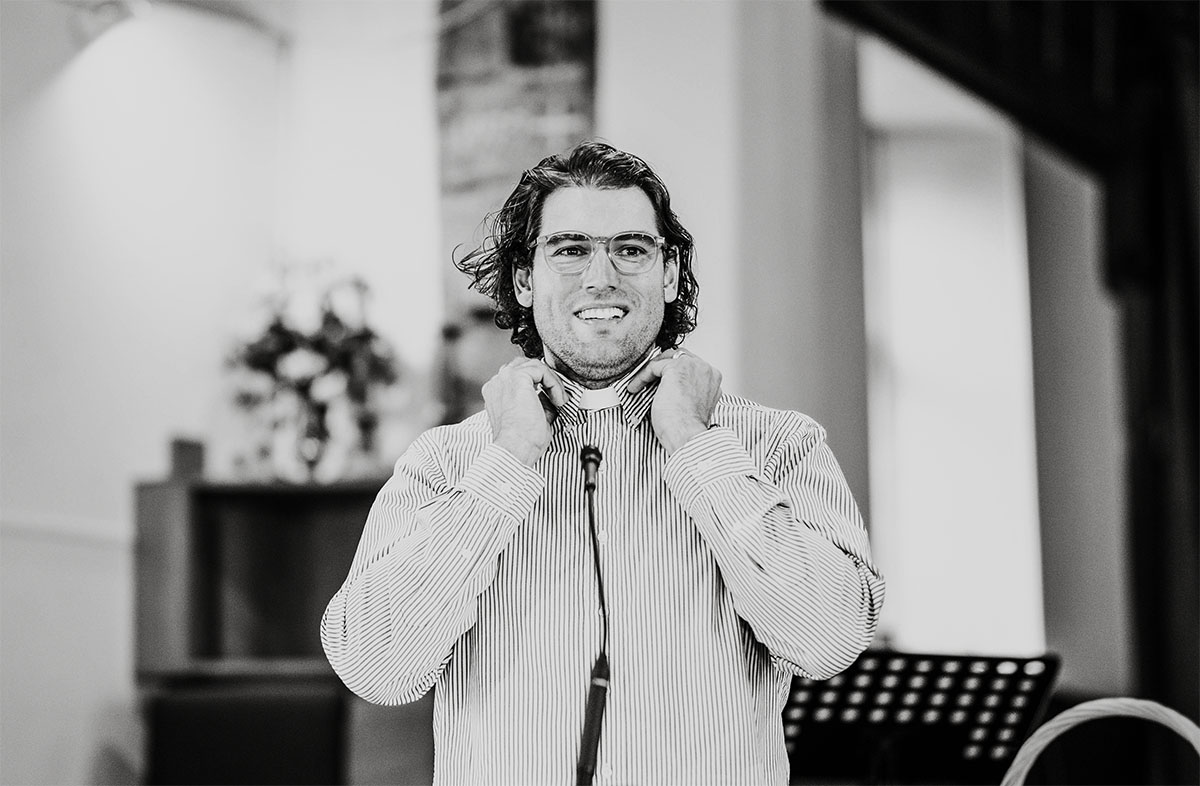
In our charismatic diocese, I enjoy that two-fold approach of being led by the Spirit while also making sure what we do mirrors God's character as we see it in Scripture.
Matt: I grew up in an Anglican parish – quite an Anglo-Catholic Church of England parish – so I was one of those altar servers wearing a white alb, wafting the incense.
I'd sum up what I like about the Anglican church as being catholic and reformed. Catholic in the sense that we have a high view of the church – we're connected with the wider church throughout history and around the world. We're not saying the Anglican church is the "one true church", but that we're part of something that is Christ's body across time and across the world. But we're also a reformed church, which means Scripture is central to shaping that tradition. When the life of the church has drifted, Scripture calls us back.
I sometimes think of Scripture a bit like a pair of secateurs, and the church as the bush – we use Scripture to prune off what isn't of Christ, and help the tradition grow well.
Glen: There's a kind of positioning – we're grounded, solid, trustworthy. There's a consistency, a long history, that people respect and value. I came in from a Baptist background, and stepping inside an Anglican church for the first time, I reacted to quite a bit of it – robes and all that. But I had a great minister who explained the liturgy, and about three months in I remember thinking: when I'm a Baptist pastor, I'm going to do confession – that's really cool. And when I'm a Baptist pastor, we’ll have the public reading of Scripture... Obviously, I never did become a Baptist pastor, God kept me in this tradition instead.
Jude: I think I've been struck by – and love most – the way we as clergy can be really honest about what's happening in our lives and how Jesus is working in those spaces. In my previous context, I always felt I had to have it all together to preach a sermon. That's not been my experience in the Anglican tradition,it's more the real story of the week, where something hasn't gone well and how God's turned up in the midst of it. We're all on a journey together. We're broken humans, but God is working through us.
Matt: I hope this isn't too twee, but it’s you guys, really!
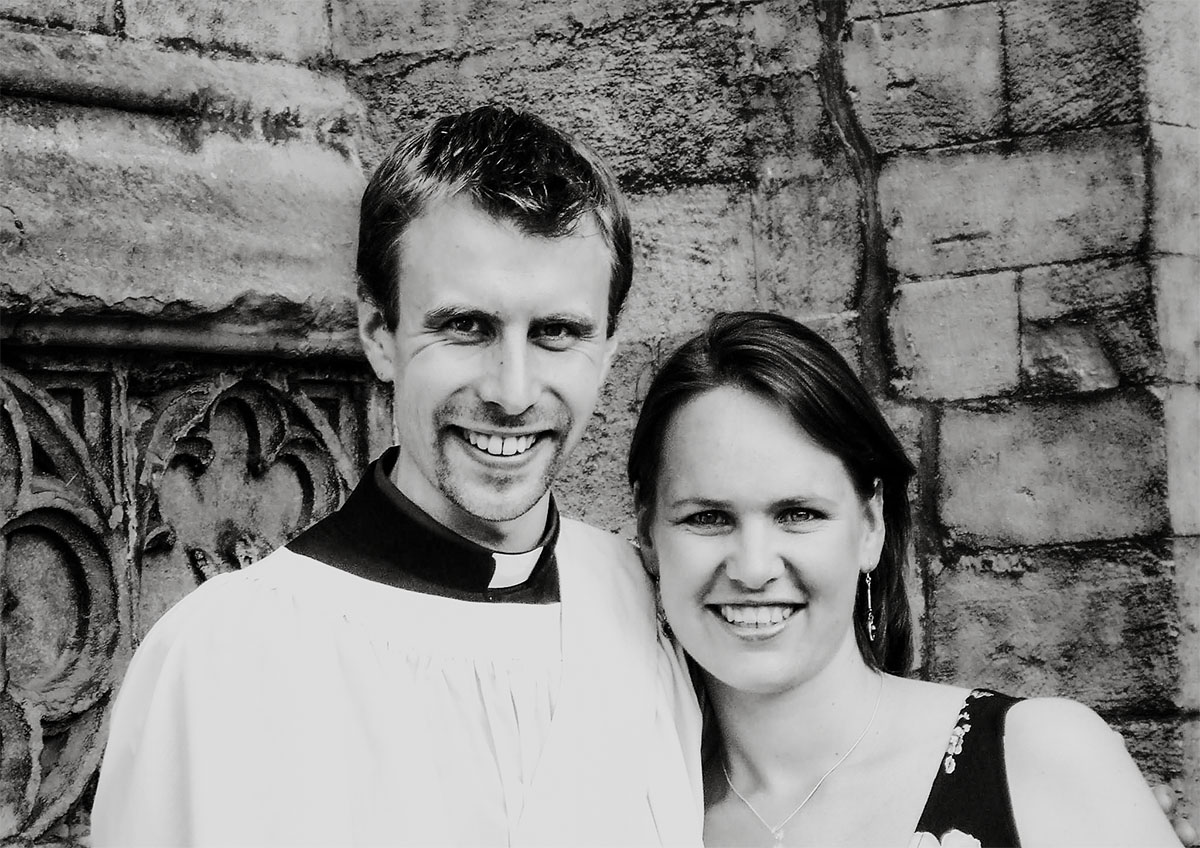
I enjoy being part of a diocese, and the variety of people within it and the different perspectives they bring – that helps sharpen and encourage us. I value the leadership of the bishop, and the resources available to us.
Glen: Two things, personally. The episcopal structure is an amazing thing – compared with some types of churches, where if you're not “bringing it”, the elders can get together and you can be “voted off the island”. In our structure, you've got responsibility over Sunday worship and a level of authority, but also episcopal oversight that supports and protects you.
And then there's that broader theology. We have a robust theology of suffering, but at the same time, when Anglicans are at their best, there's this evangelical spirit too: God is at work in our lives now, he is present now, he wants to do things now – we can pray for healing and expect him to work. That breadth is really great.
Jude: It’s hard to put this without sounding like an encouragement and a punch in the face at the same time:
I think we're uniquely positioned for growth and revival because we have a lot of space in our churches and an amazing group of praying people seeking God's work in our communities. That's setting us up for the growth we're starting to see around the region. We've got the infrastructure to support it: when churches grow, we're ready. We don't have to dream up new systems or develop new safety plans on the fly. And there's more resource, whether infrastructure or financial, than in any church organisation I've worked in. I think there's a real hunger, as Bishop Steve has been saying in his charges over the past years, around evangelism and revival – I think we're uniquely positioned for that ministry of welcoming new people into the kingdom of God.
Glen: We had a couple visiting our church on Sunday who were from New Life up north. The lady said she really appreciated the different style of our service – the liturgical communion pulled her into a different mode of reflection, reverence and awe, and that really spoke to her. I think that's a great strength. We've seen this move in society where people are longing for those kinds of spaces, and we have something to offer. I'm keen to build more of a Pentecostal-style expectancy into the current life of our church, but I don't want to let go of those aspects of our service that give people a chance to experience something in a different mode than they're used to.
Matt: There are a few people I chatted with recently who made the decision to become Catholics. What's attracted them to Catholicism is that sense of being part of something bigger that's gone through the history of the church, part of a bigger tradition. And I’ve said to them, Anglicanism has got that too! But we also have an understanding of Scripture that allows us to examine that tradition critically – to keep hold of what is a faithful outworking of the Bible, and to reject the bits which are not.
Let’s not assume that informal ways of doing church are the only thing that attract people. A deep and faithful tradition that connects people to the Biblical story is one of our greatest assets.
Check out other articles in the
series below.
More articles in the
series are to come.
We have invited these writers to share their experiences, ideas and opinions in the hope that these will provoke thought, challenge you to go deeper and inspire you to put your faith into action. These articles should not be taken as the official view of the Nelson Diocese on any particular matter.
We're thinking about mission opportunities at the moment – about the positive sides of being Anglican in this particular cultural moment. Simon Martin likes to say this Anglican boat is a good boat to fish from, and I think he's right! We don't need to shy away from being Anglican.
To explore that, I've invited three of our clergy to chat about it – Jude Saxon, deacon at St Barnabas, Matt Watts, vicar of Buller Parish, and Glen Ashworth, vicar of Nativity Church in Blenheim.
I’m asking three questions: What does being Anglican mean for you? What do you love most personally about Anglican-shaped ministry? And what one mission opportunity do you see that Anglicans are uniquely positioned for?
Jude: I'm relatively new to the tradition – though less new as the years go on. My previous context was charismatic pentecostal, so my sense of being Anglican comes from noticing the differences between the two.
There’s a deep sense of connection I feel as part of the Nelson Diocese, and as part of a unified body across New Zealand and Polynesia. Because of our structures there's a deep sense of connection I hadn't experienced in previous contexts. Alongside that is something I've been almost overwhelmed with – the amount of people who check in with you, whether through formal structures, or just because there's a number of people doing ministry around the place. That's really significant to me, and it's not something that I've experienced before.
I also value the long history of theological engagement in the Anglican church, and the way that flows through into our preaching and the way we do things – particularly with the way we engage with the Holy Spirit.
In our charismatic diocese, I enjoy that two-fold approach of being led by the Spirit while also making sure what we do mirrors God's character as we see it in Scripture.
Matt: I grew up in an Anglican parish – quite an Anglo-Catholic Church of England parish – so I was one of those altar servers wearing a white alb, wafting the incense.
I'd sum up what I like about the Anglican church as being catholic and reformed. Catholic in the sense that we have a high view of the church – we're connected with the wider church throughout history and around the world. We're not saying the Anglican church is the "one true church", but that we're part of something that is Christ's body across time and across the world. But we're also a reformed church, which means Scripture is central to shaping that tradition. When the life of the church has drifted, Scripture calls us back.
I sometimes think of Scripture a bit like a pair of secateurs, and the church as the bush – we use Scripture to prune off what isn't of Christ, and help the tradition grow well.
Glen: There's a kind of positioning – we're grounded, solid, trustworthy. There's a consistency, a long history, that people respect and value. I came in from a Baptist background, and stepping inside an Anglican church for the first time, I reacted to quite a bit of it – robes and all that. But I had a great minister who explained the liturgy, and about three months in I remember thinking: when I'm a Baptist pastor, I'm going to do confession – that's really cool. And when I'm a Baptist pastor, we’ll have the public reading of Scripture... Obviously, I never did become a Baptist pastor, God kept me in this tradition instead.
Jude: I think I've been struck by – and love most – the way we as clergy can be really honest about what's happening in our lives and how Jesus is working in those spaces. In my previous context, I always felt I had to have it all together to preach a sermon. That's not been my experience in the Anglican tradition,it's more the real story of the week, where something hasn't gone well and how God's turned up in the midst of it. We're all on a journey together. We're broken humans, but God is working through us.
Matt: I hope this isn't too twee, but it’s you guys, really!
I enjoy being part of a diocese, and the variety of people within it and the different perspectives they bring – that helps sharpen and encourage us. I value the leadership of the bishop, and the resources available to us.
Glen: Two things, personally. The episcopal structure is an amazing thing – compared with some types of churches, where if you're not “bringing it”, the elders can get together and you can be “voted off the island”. In our structure, you've got responsibility over Sunday worship and a level of authority, but also episcopal oversight that supports and protects you.
And then there's that broader theology. We have a robust theology of suffering, but at the same time, when Anglicans are at their best, there's this evangelical spirit too: God is at work in our lives now, he is present now, he wants to do things now – we can pray for healing and expect him to work. That breadth is really great.
Jude: It’s hard to put this without sounding like an encouragement and a punch in the face at the same time:
I think we're uniquely positioned for growth and revival because we have a lot of space in our churches and an amazing group of praying people seeking God's work in our communities. That's setting us up for the growth we're starting to see around the region. We've got the infrastructure to support it: when churches grow, we're ready. We don't have to dream up new systems or develop new safety plans on the fly. And there's more resource, whether infrastructure or financial, than in any church organisation I've worked in. I think there's a real hunger, as Bishop Steve has been saying in his charges over the past years, around evangelism and revival – I think we're uniquely positioned for that ministry of welcoming new people into the kingdom of God.
Glen: We had a couple visiting our church on Sunday who were from New Life up north. The lady said she really appreciated the different style of our service – the liturgical communion pulled her into a different mode of reflection, reverence and awe, and that really spoke to her. I think that's a great strength. We've seen this move in society where people are longing for those kinds of spaces, and we have something to offer. I'm keen to build more of a Pentecostal-style expectancy into the current life of our church, but I don't want to let go of those aspects of our service that give people a chance to experience something in a different mode than they're used to.
Matt: There are a few people I chatted with recently who made the decision to become Catholics. What's attracted them to Catholicism is that sense of being part of something bigger that's gone through the history of the church, part of a bigger tradition. And I’ve said to them, Anglicanism has got that too! But we also have an understanding of Scripture that allows us to examine that tradition critically – to keep hold of what is a faithful outworking of the Bible, and to reject the bits which are not.
Let’s not assume that informal ways of doing church are the only thing that attract people. A deep and faithful tradition that connects people to the Biblical story is one of our greatest assets.
Check out other articles in the
series below.
More articles in the
series are to come.