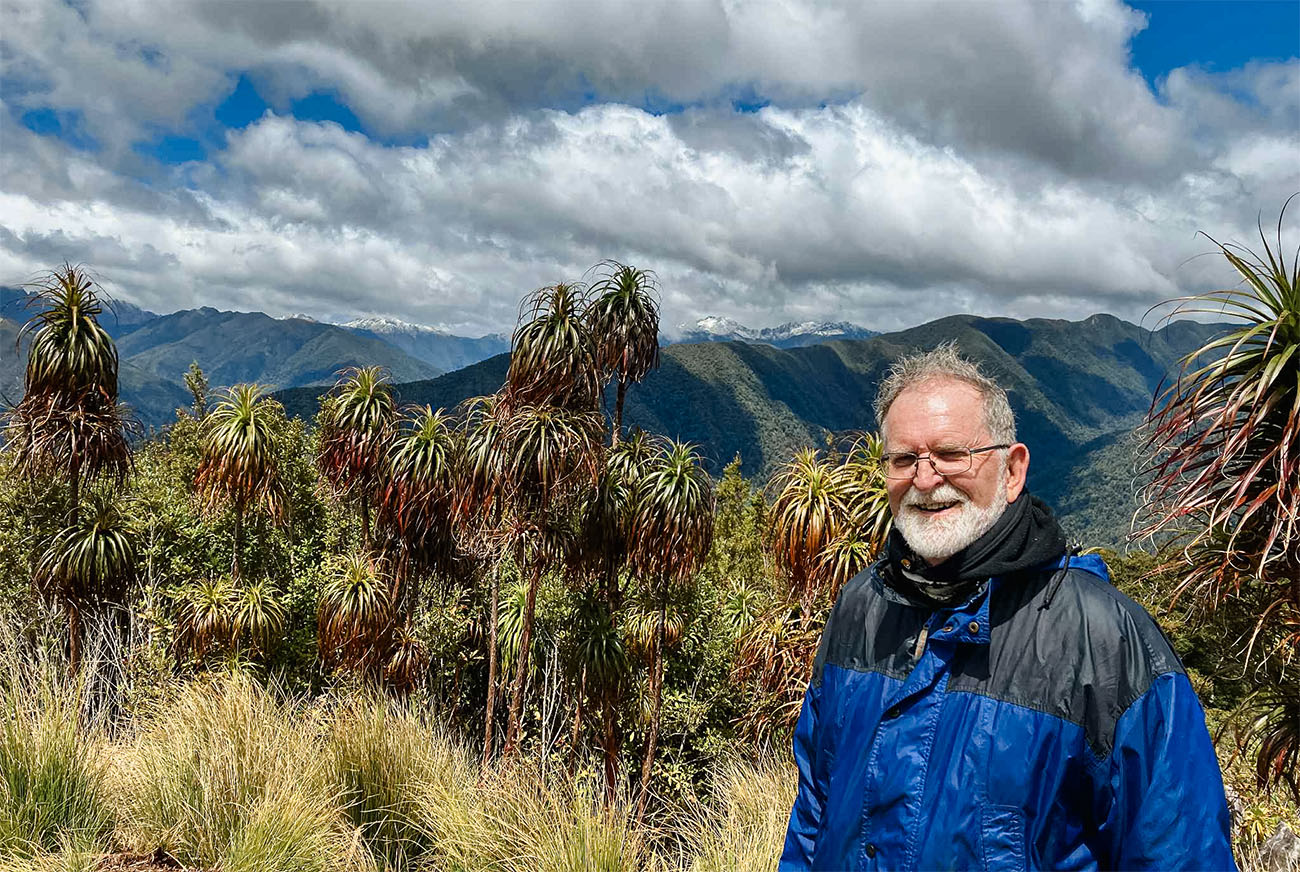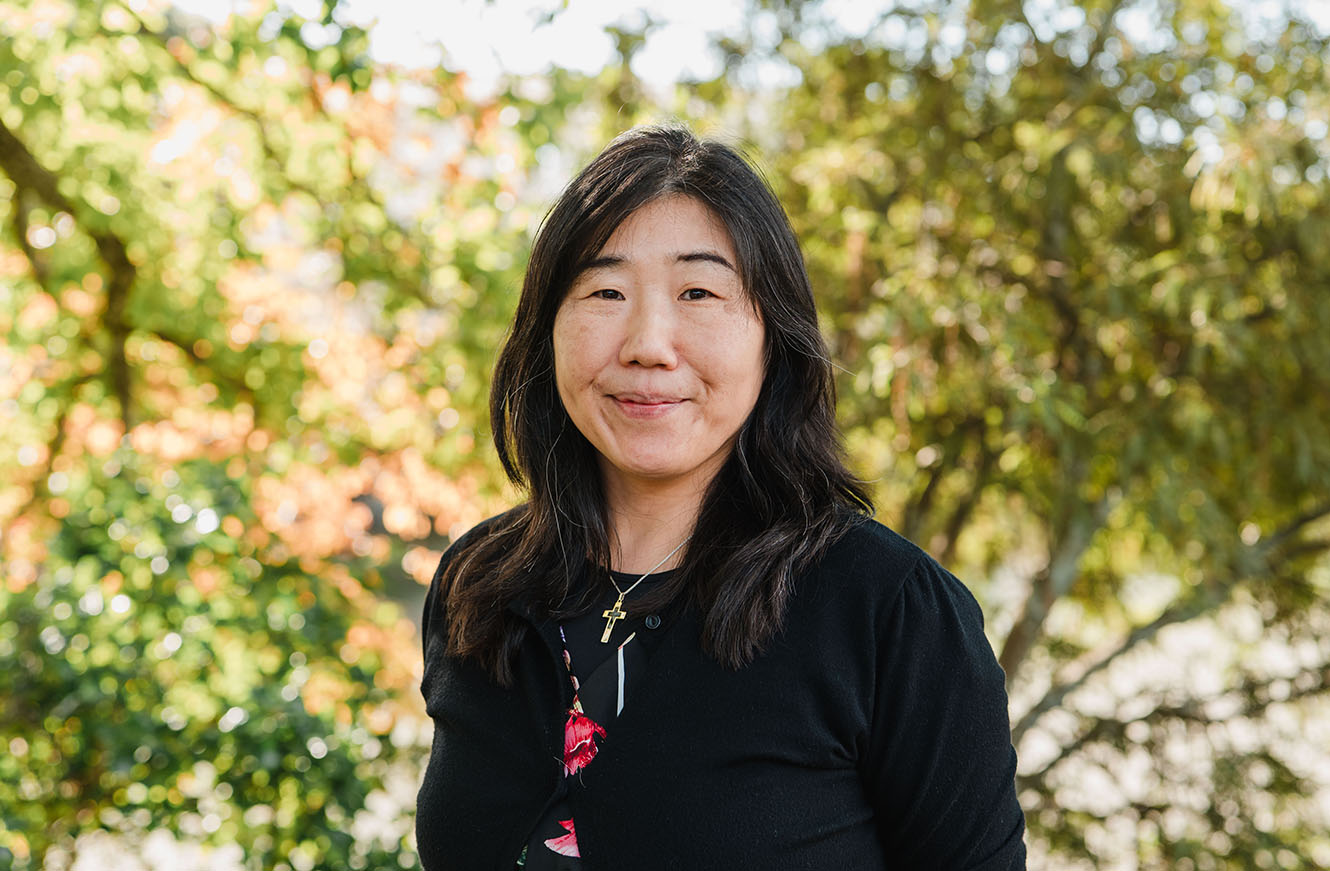
Mika Ito is the new administrative assistant to the diocesan manager here in the Anglican Centre. Alongside helping Chris, she processes grants, takes committee minutes and offers a friendly face at reception. She and her husband immigrated from Japan to New Zealand around 22 years ago and have two sons.
Mika appreciates the arts, with a background in theatre and a love for dance. She sings and plays piano, and is currently writing a worship song – which I would like to hear as soon as it’s ready, even though she tells me it will be in Japanese.
I sat down with Mika in the office to get to know her story and find out how she met Jesus in a country that is notoriously closed to Christianity.
Mika: I was born into a typical Japanese family that follows Buddhism and Shintoism.
I have quite a good memory of my childhood, and I can remember searching for God since I was four or five. I knew there was something more to life. I felt a sense of emptiness, like a black hole, that I was afraid of even as a little child. I went to a kindy run by a Buddhist temple, so I would pray to Buddha and the Shinto gods.
When I was 15 I had to start thinking about my career, and at that time I wanted to be a monk or a nun. I was that desperate for the truth!
Mika: After all of those years praying to Shinto gods and Buddha, I still couldn't find the answer to my problem. So I concluded that there must be no God. Then I just spent my life in pursuit of success and tried to find answers in entertainment, music and drama.
In my second year at uni, I started working for a theatrical company. My career was successful, but after my first relationship failed, I found that emptiness was still there, a big black hole inside of me trying to swallow me.
It was during the summer holiday, when I was 19, that I became really depressed. I quit the theatre company and isolated myself in a small room in my apartment in Tokyo. I read a lot of books – some of them Christian, which I thought had some good messages, but I couldn't figure out what it was really about. I didn’t go anywhere or talk to anyone, I didn’t even want to eat. I thought I might die.
Then I remembered a couple who ran the English school that I went to as a high school student. They had always said that I could contact them even after I left school. So I called them, and they invited me to church in my hometown.
When I entered the church on Sunday, everyone was worshipping.
Mika: No. The Christian population in Japan is around one percent, so it's very unusual to meet Christians there.
Becoming a Christian is like a betrayal to your family.
Japanese people are very spiritual, and it’s very important to them. For centuries, Christianity was prohibited in Japan, and there were strict controls put in place by the government requiring that every family belong to a temple. So everyone in Japan has a long family line that belongs to a temple, even after the ban on Christianity was lifted.
It's very important for Japanese people to keep the family grave at their temple from generation to generation. Keeping the tomb means worshipping your ancestors. So if you say you're a Christian, it means you don't look after your ancestors anymore. Your parents will say, “What will happen to our tomb, to the graveyard we looked after for generations!”
Mika: Yes. I still see it as a pastor of a Japanese church. Sometimes a Japanese person will come to our church, and it’s so obvious they are touched and want to make a commitment to Christ. So of course I invite them to receive Jesus, and the answer I often get is, “But what if my family found out about it?”
Mika: After several years of working in Tokyo, I decided to be a staff member at my home church, working as a youth pastor and a secretary to the senior pastor. Then I got married, and when we turned 30, my husband started to think about having a working holiday. He suggested New Zealand, so we considered places like Nelson, but I wasn’t sure. I was praying and didn’t hear clearly from God. When my husband said it was time to make a decision, I asked for one more night to ask God – but I was too tired to pray, so I asked God to speak to me in a dream. And in that dream, I was walking along a street in Nelson. Then Japanese people walked up to me and said, “Please come and help.” So I told my husband, “Let's go to Nelson!”
When we arrived, we went to Atawhai Community Church. There was a Japanese lady there who was so excited to see us because she had been praying for God to send Japanese people to the church.
It was clear that me and my husband had been sent by God to do his work, not just have a holiday, so I talked to the pastor and said we wanted to start a group for Japanese people, an ESOL group, and a playgroup for Japanese mums and children. The church backed us. When our working holiday visa expired, we got a religious worker visa, and then got our residency.
We've been continuing Japanese ministry ever since. We now work through Catch the Fire, and our ministry is called Sakura Ministry. There are three other Japanese Catch the Fire groups in the country, and we meet online for church every week.
Check out other articles in the
series below.
More articles in the
series are to come.
We have invited these writers to share their experiences, ideas and opinions in the hope that these will provoke thought, challenge you to go deeper and inspire you to put your faith into action. These articles should not be taken as the official view of the Nelson Diocese on any particular matter.
Mika Ito is the new administrative assistant to the diocesan manager here in the Anglican Centre. Alongside helping Chris, she processes grants, takes committee minutes and offers a friendly face at reception. She and her husband immigrated from Japan to New Zealand around 22 years ago and have two sons.
Mika appreciates the arts, with a background in theatre and a love for dance. She sings and plays piano, and is currently writing a worship song – which I would like to hear as soon as it’s ready, even though she tells me it will be in Japanese.
I sat down with Mika in the office to get to know her story and find out how she met Jesus in a country that is notoriously closed to Christianity.
Mika: I was born into a typical Japanese family that follows Buddhism and Shintoism.
I have quite a good memory of my childhood, and I can remember searching for God since I was four or five. I knew there was something more to life. I felt a sense of emptiness, like a black hole, that I was afraid of even as a little child. I went to a kindy run by a Buddhist temple, so I would pray to Buddha and the Shinto gods.
When I was 15 I had to start thinking about my career, and at that time I wanted to be a monk or a nun. I was that desperate for the truth!
Mika: After all of those years praying to Shinto gods and Buddha, I still couldn't find the answer to my problem. So I concluded that there must be no God. Then I just spent my life in pursuit of success and tried to find answers in entertainment, music and drama.
In my second year at uni, I started working for a theatrical company. My career was successful, but after my first relationship failed, I found that emptiness was still there, a big black hole inside of me trying to swallow me.
It was during the summer holiday, when I was 19, that I became really depressed. I quit the theatre company and isolated myself in a small room in my apartment in Tokyo. I read a lot of books – some of them Christian, which I thought had some good messages, but I couldn't figure out what it was really about. I didn’t go anywhere or talk to anyone, I didn’t even want to eat. I thought I might die.
Then I remembered a couple who ran the English school that I went to as a high school student. They had always said that I could contact them even after I left school. So I called them, and they invited me to church in my hometown.
When I entered the church on Sunday, everyone was worshipping.
Mika: No. The Christian population in Japan is around one percent, so it's very unusual to meet Christians there.
Becoming a Christian is like a betrayal to your family.
Japanese people are very spiritual, and it’s very important to them. For centuries, Christianity was prohibited in Japan, and there were strict controls put in place by the government requiring that every family belong to a temple. So everyone in Japan has a long family line that belongs to a temple, even after the ban on Christianity was lifted.
It's very important for Japanese people to keep the family grave at their temple from generation to generation. Keeping the tomb means worshipping your ancestors. So if you say you're a Christian, it means you don't look after your ancestors anymore. Your parents will say, “What will happen to our tomb, to the graveyard we looked after for generations!”
Mika: Yes. I still see it as a pastor of a Japanese church. Sometimes a Japanese person will come to our church, and it’s so obvious they are touched and want to make a commitment to Christ. So of course I invite them to receive Jesus, and the answer I often get is, “But what if my family found out about it?”
Mika: After several years of working in Tokyo, I decided to be a staff member at my home church, working as a youth pastor and a secretary to the senior pastor. Then I got married, and when we turned 30, my husband started to think about having a working holiday. He suggested New Zealand, so we considered places like Nelson, but I wasn’t sure. I was praying and didn’t hear clearly from God. When my husband said it was time to make a decision, I asked for one more night to ask God – but I was too tired to pray, so I asked God to speak to me in a dream. And in that dream, I was walking along a street in Nelson. Then Japanese people walked up to me and said, “Please come and help.” So I told my husband, “Let's go to Nelson!”
When we arrived, we went to Atawhai Community Church. There was a Japanese lady there who was so excited to see us because she had been praying for God to send Japanese people to the church.
It was clear that me and my husband had been sent by God to do his work, not just have a holiday, so I talked to the pastor and said we wanted to start a group for Japanese people, an ESOL group, and a playgroup for Japanese mums and children. The church backed us. When our working holiday visa expired, we got a religious worker visa, and then got our residency.
We've been continuing Japanese ministry ever since. We now work through Catch the Fire, and our ministry is called Sakura Ministry. There are three other Japanese Catch the Fire groups in the country, and we meet online for church every week.
Check out other articles in the
series below.
More articles in the
series are to come.